


Best UPSC Mains Books Recommended by IAS Toppers: Subject-Wise Booklist
Thousands of hopefuls compete for a spot in the UPSC Civil Services Examination each year. However, only a small group of aspirants make it through to the end. When you ask those who are successful what made them stand out, almost all will tell you it was because they didn't read a lot of books, but rather they read the best UPSC preparation books over and over until the information became second nature to them. This is something every candidate should understand before they ever open up their first NCERT textbook.
The UPSC Mains exam differs significantly from the Prelims exam; although Prelims are focused on quick recall and elimination techniques, Mains require much greater depth of knowledge as well as being organised in presenting ideas, and having the ability to connect ideas between different subjects. Therefore, it is imperative that you choose your booklist for Mains carefully rather than simply picking whatever new books are being promoted on social media by a coaching institution. Below we have provided subject-specific recommended books for IAS by toppers that have stood the test of time and are still used by new rankers around the world each year.
Read More - Why UPSC Is Considered One of the Toughest Exams in India?
UPSC Books Recommended by Toppers
Aspirants today are flooded with resources such as YouTube lectures, Telegram channels, online notes, and more, due to which getting distracted is quite easy. Toppers often advise choosing one standard book per subject and revising it multiple times rather than skimming through five different sources once.
With that principle in mind, here is the list of best books for IAS recommended by toppers that sail through GS Paper 1 to 4.
GS Paper 1: History, Geography, Society, and Culture
This paper covers the major chunk of the UPSC exam, which is when well-prepared increases chances of cracking the exam.
The most effective way to learn Modern Indian History is by using Spectrum’s book “A Brief History of Modern India.” It contains a concise overview of the freedom struggle and significant events, making it ideal for exam purposes, but many successful candidates also pair it with Bipan Chandra’s book “India’s Struggle for Independence.” This provides an additional analysis of the topic and is especially useful when writing Mains-style questions that need to present nuances.
When it comes to Art and Culture, Nitin Singhania’s compilation is by far the most well-cited source. The catalogue has compiled the large, diverse cultural heritage of India, including dance forms, architecture, festivals, and classical traditions, into an organised format; therefore, it is now almost essential reading for aspirants.
Geography can be better prepared with NCERT textbooks before moving to G.C. Leong’s Certificate Physical and Human Geography. For the NCERTs, you can look for good options available in the market such as Oswaal NCERT One For All, for crisp & effective preparation. Talking about G.C. Leong in specific, you can attain an in-depth understanding of climatology, geomorphology, and oceanography.
For Indian Society, NCERT sociology textbooks combined with current affairs on social issues — poverty, urbanisation, gender, and communalism — tend to serve aspirants well, since this section rewards contemporary awareness as much as theoretical understanding.
Once the conceptual base from these standard texts is solid, many aspirants turn to Oswaal's UPSC books to consolidate everything before revision. They are particularly useful for their topic-wise previous years' questions and chapter-end practice sets, which help convert static reading into exam-ready answer writing, something the original reference books alone don't always provide.
GS Paper 2: Governance, Constitution, Polity, and International Relations
If there is one book that nearly every successful candidate names without hesitation, it is M. Laxmikanth's "Indian Polity." It is considered the bible for Indian Polity to better understand the Constitution, Parliament, judiciary, and the broader governance framework. You can pair this with Oswaal Indian Polity for UPSC (Prelims & Mains), which will help you gain a legalistic and detailed understanding of constitutional provisions, particularly useful when questions demand a comparison with other democracies.
For Governance and International Relations, there is no single standard book; instead, toppers lean heavily on current affairs magazines, PIB updates, and government reports. The Second Administrative Reforms Commission (ARC) reports are particularly valuable here, offering ready-made frameworks for governance-related answers. For better understanding, you can take the help of UPSC Mains solved papers to know which kind of questions are framed related to this particular section.
GS Paper 3: Economy, Environment, Science and Technology, and Security
Ramesh Singh's "Indian Economy" is a highly regarded resource for studying the Indian Economy because it provides an intuitive approach to understanding concepts rather than presenting them in a dry, textbook manner. The "Economic Survey" and "Union Budget" are mandatory readings year after year, as the questions asked in Mains often come directly from the material that appears in both documents.
The Shankar IAS Environmental Book has become a seminal text on environmental science for aspirants. This book covers biodiversity, climate change, and environmental policy exceptionally well and is laid out so clearly that it lends itself very well to rapid revision before an exam.
As far as Science and Technology go, there is no one dominant standard book; most aspirants depend on the current news sources, as well as press releases from the government, because this portion of the syllabus will continue to grow and change based upon new developments in the fields of space, defence and biotechnology.
For Internal Security and Disaster Management, NCERT-level understanding combined with current affairs coverage on terrorism, cyber security, and disaster management policies tends to be sufficient, provided it is updated regularly.
GS Paper 4: Ethics, Integrity, and Aptitude
This paper rewards contestants for their original thinking and for their ability to apply ethical frameworks to actual scenarios. A suitable Lexicon-style book for Ethics, which contains key terms such as integrity, probity and emotional intelligence defined in exam-appropriate language, is considered by toppers to be an excellent place to start. The Second ARC reports are also relevant here; particularly, the reports on ethics in governance provide case study examples and theoretical foundations that examiners often look for in responses. Pairing this with Oswaal's Ethics book by Shubhra Ranjan is often mentioned because it aggregates many previous years’ case studies into one place along with example solution methods to assist candidates in constructing their own responses rather than starting from scratch.
The Words of Motivation to Help You Improve Your Learning Journey
There is no magic formula or secret book guaranteed to succeed in the UPSC Mains exam; the list of books above is an open secret, or we would consider these as the best books to read for UPSC Mains. It is the fact that almost all of the rank holders used these exact same books that have stayed the same over the years that gives credence to their effectiveness. What makes a selected candidate different from a non-selected candidate is, in most cases, not the booklist itself, but the discipline to study the booklist, to keep studying the booklist repeatedly until it is memorised very well, and to integrate the knowledge into a well-organised answer for the purpose of the exam.
If you are new to the UPSC journey, stop chasing after all of the great new recommendations for subject matter. Find a good standard book to study for each subject, use good quality resources such as the Oswaal IAS preparation books, study & commit to them, and let consistency take care of everything else, as countless toppers have shown that, in this exam, depth will win against width almost every single time.
Recommended UPSC Books | Study Materials
Are You a Teacher? Apply for FREE UPSC Specimen Books For Teachers from our end.
Frequently Asked Questions
1. How many books should I read for each GS paper in UPSC Mains?
Toppers generally recommend sticking to one standard reference book per subject, supplemented by a single current affairs source and one practice or previous-year-questions resource, such as an Oswaal workbook. Reading more than this often leads to confusion rather than clarity.
2. Do I need to read NCERTs if I am already using standard reference books?
Yes, especially for History, Geography, and Society. NCERTs build the conceptual foundation that standard books assume you already have, and skipping them often creates gaps that surface only when you attempt difficult Mains questions. Here, you can take the help of Oswaal NCERT One For All to make your study routine even smoother.
3. How useful are practice books like Oswaal for Mains preparation?
Very useful, but only as a second step after building conceptual clarity. Books like Oswaal work best for organising previous years' questions, practising answer structure, and revising just before the exam — they are not a substitute for the standard texts.
4. How many times should I revise each book before the exam?
Most successful candidates report revising their core books at least three times, once for understanding, once for retention, and once closer to the exam purely for recall and speed.
Recent Posts
Best ICSE Class 10 Books for Revision and Mock Test Practice
When it comes to the best books for Class 10 ICSE 2027, Oswaal Books are among the top recommendations, prepared around the latest ICSE syllabus with...

UPSC Mains Revision Checklist for GS Paper 1, 2, 3 & 4
The UPSC Civil Services Mains examination tests the knowledge of the candidates across four General Studies papers—GS Paper 1, GS Paper 2, GS...
How Can We Make Studies Fun for Class 2 Kids?
You sit down to study with your class 2 child; after 10 minutes, they begin to fidget, stare at the wall or ask for a break. Sounds familiar? Kids in...
.png)
How do I choose the best CTET books for Paper 1 (Primary Level)?
“Which is the best CTET book to buy?” Most common question aspirants ask. There are so many books in the market that claim to be the best. It’s...

Olympiad Exams Preparation for Class 5 2026-27: Maths, Science, & English Strategy
In the year 2026-27, children will be required to have a slightly better and more structured approach when they are sitting for the Olympiad exams in...
JEE Main 2027 Mock Test Dates: When to Start and How Many Mock Tests to Attempt?
What if you are scoring 180 in mock tests and only 120 in actual JEE Main? Most of the time, the problem is not your preparation, but your mock test...

Best Subject-wise Books for Indian Air Force Group X & Y Exam Preparation
Getting into the Indian Air Force is a dream for many young students across India. Whether you want to join as a technical trade (Group X) or a...
JEE Main 2027 Daily Timetable: How Many Hours Should You Study?
There is one universal question among all the aspirants of JEE: how many hours do I need to study per day to get selected for JEE Main 2027? There is...
Career Options After 12th PCB: Best Courses and Career Paths for Science Students
PCB stream opens doors to dozens of career options, and the decision you make after 12th determines the next few years of your life. Pick courses...
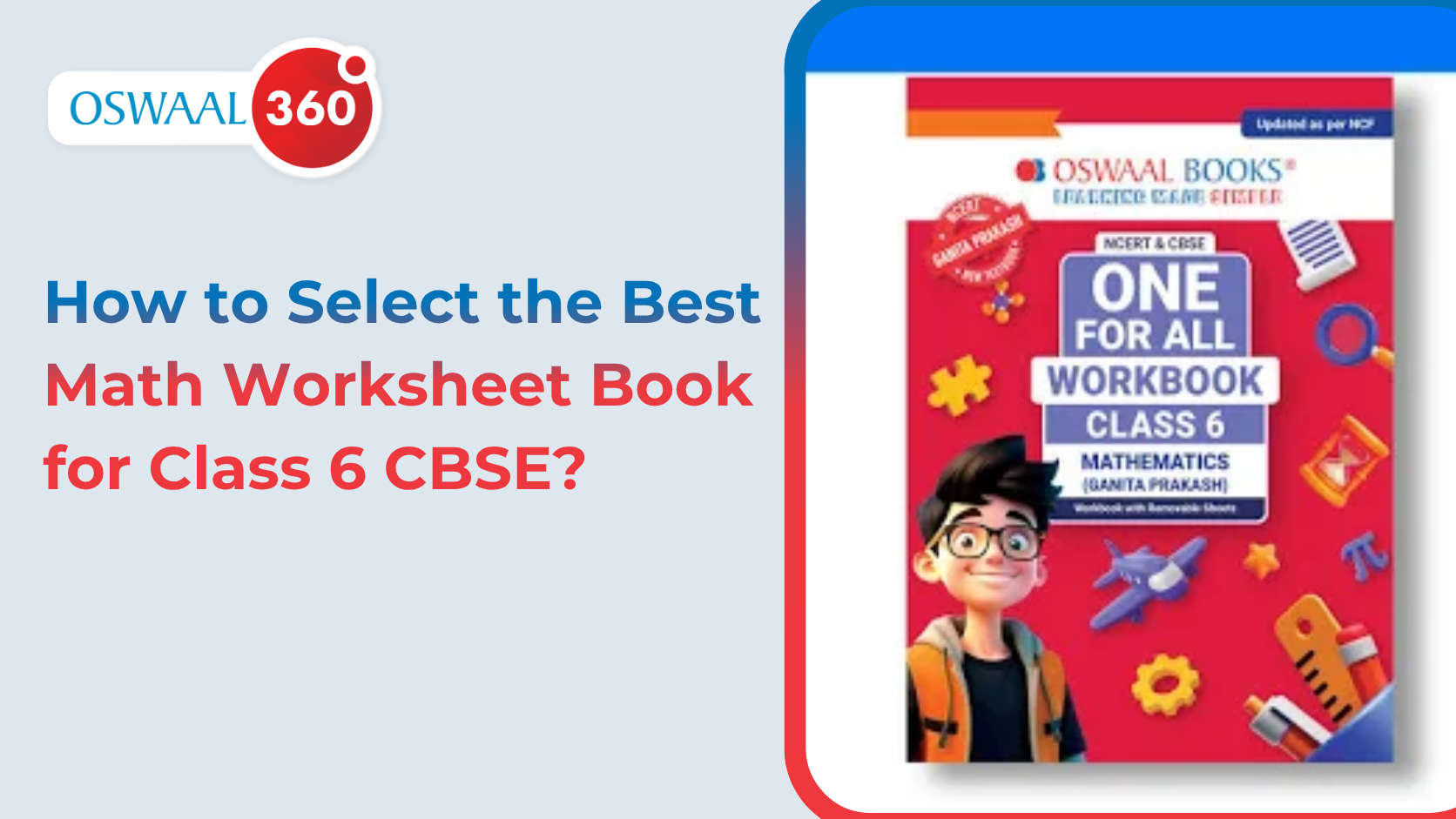
How to Select the Best Math Worksheet Book for Class 6 CBSE?
Class 6 is a very important milestone in the mathematical journey of a student. Concepts get more detailed, questions require more thought, and just...