


What are the best reference books for CBSE Class 6 students? (Complete Guide For All Subjects)
.png)
The best reference books for CBSE Class 6 students align with the NCERT syllabus and provide additional practice through question banks, workbooks and revision material.
Class 6 is a crucial transition in a student’s academic life. Learning is more structured and detailed. Maths introduces fractions, integers and geometry, while Science and Social Science move to more concept-based and analytical.
NCERT Textbooks are the base of CBSE learning and are important for making strong concepts. But they have limited practice and fewer question variations, which can make it hard to prepare for exams on their own.
Reference books, question banks and workbooks help by providing more practice, revision support and exposure to different question types.
Oswaal Books are widely used amongst trustworthy CBSE resources to prepare in a systematic and exam-oriented manner.
CBSE Class 6 Syllabus (All Subjects) Overview
Before you decide to pick any CBSE books class 6, it is better to know what Class 6 is all about. So here is a quick overview:
-
Mathematics Covers number systems, fractions and decimals, geometry, mensuration, basics of algebra, ratio and proportion, and data handling.
-
Science introduces students to food, materials, living things, motion and measurement, light, electricity and the environment.
-
English includes reading comprehension, grammar, writing skills and vocabulary through the Honeysuckle and A Pact with the Sun textbooks.
-
Social Science is divided into three parts – History (Our Pasts), Geography (The Earth Our Habitat) and Civics (Social and Political Life).
-
Hindi has grammar, letters and essay writing, comprehension and prose and poetry from the books Vasant and Durva. Schools may also teach regional languages or Sanskrit.
Top Reference Books for CBSE Class 6 (Subject-wise Guide)
CBSE Books for Class 6 Maths
Maths in Class 6 rewards practice over everything else. If a student has not solved enough problems, then even if he reads a chapter on fractions twice, he can make mistakes in sums. Concept clarity is important, but so is repetition with variation.
Look for:
-
Step by step solutions with work shown, not just answers. Students only learn where they went wrong if they can see the way.
-
Apart from NCERT, more practice questions covering MCQs, fill in the blanks, short answer and word problems
-
Mental ability exercises to develop logical thinking and number sense.
CBSE Class 6 Science Book
Science at this level is all about curiosity and observation. The NCERT book starts each chapter with a real-life context, which a good reference book should also carry forward.
Look for:
-
Clear diagrams for parts of a plant, digestive system, types of rocks etc. Visuals are important in science.
-
MCQs and assertion-reasoning type questions to check whether the student has understood the concept or just has crammed it.
-
Concept maps illustrate the connection between different ideas within a chapter.
CBSE Class 6 English Book
English needs a three pronged approach. Grammar, comprehension, and finally writing. Most of the students are good at one subject and bad at the others. A good reference book covers all three together.
Look for:
-
Grammar exercises on tenses, parts of speech, punctuation and sentence correction in graded format.
-
Reading passages with a combination of factual and inferential questions. Students must practise reading closely and responding in their own words.
-
Model answers for writing skill sections for paragraphs, letters and short essays.
CBSE Class 6 Social Science Book
Social Science consists of three different areas. It is often considered a heavy subject by students because of the amount of information. You can cope with the right reference book.
Look for:
-
Simple explanations of History chapters, which bring events alive instead of presenting them as dry facts.
-
Geography section with maps and timeline charts helps students to perceive spatial and chronological information.
-
Notes on Civics, presented in an easy-to-understand manner for quick revision.
Language & Hindi Books
In two fields, grammar and expression, Hindi and language books should be superlative.
On the grammar side, look for practice on sandhi, samas, karak, tenses and synonyms and antonyms. They are a common feature in the exams.
On the expression side, look for practice formats for essays (nibandh), letters (patra lekhan) and comprehension passages. Constant practice of these formats by students helps them to increase their speed and accuracy in the exams.
NCERT Books vs Reference Books for Class 6
NCERT is not an option. That’s what it’s based on. The CBSE exam is based on NCERT content, and all the students must read and understand their NCERT workbook before touching any reference book.
But reference books do a job that NCERT does not. This is where they add real value.
-
Extra questions help students to practise more than the limited exercises given in NCERT.
-
Practice tests make students less anxious about the format and time pressure of the exam.
-
Revision notes condense big chapters into short, scannable content for quick revision before exams.
NCERT first, always. That's the right way. Then work through an NCERT workbook daily. Then revise thoroughly using a question bank before the exams. This combination provides students with both depth and breadth.
Why Question Banks and Workbooks are Important for Class 6
Some parents ask whether question bank class 6 are needed. Yes, they are, and here’s why.
Class 6 is when study habits are set. A student who keeps practising from here develops skills that go through Class 10 and Class 12. A student who reads but does not practise gets a false sense of understanding.
Concepts stick with practice-based learning. When students are solving a problem, they are actively interacting with the material. Reading is a passive activity. Solving is involved.
Question banks are a self-assessment tool which tells the students where they stand. They figure out their weaknesses early, when there is still plenty of time to fix them.
Studying for the exam doesn’t happen overnight. Those who start practising from Class 6 itself are much more comfortable in Class 9 and 10 exams as compared to those who start preparing only near the board years.
Writing is helpful for memory. Workbooks reinforce memory. Students retain material better when they write out answers regularly.
How to Choose Best Books for CBSE Class 6?
There are many options in the market. So, here is a clear checklist to help you decide:
-
As per CBSE syllabus. Book should be according to the latest CBSE syllabus. Do not go for books that look old or do not mention the relevant NCERT Chapters.
-
Language and clarity. Answers should be in plain English that a 10-11 year old can understand on his or her own. If a child has to have a parent or teacher explain the reference book, it is a waste of time.
-
Mix up the questions. Same book contains MCQs, very short answer questions, short answer questions, long answer questions and higher order thinking questions.
-
Explanations with answers. The answers at the back of the book are not enough. The student must know why an answer is correct, especially in Maths and Science.
-
Updated as per latest curriculum. CBSE updates their syllabus on regular basis. Make sure that the edition you purchase is the current syllabus edition.
Why Choose Oswaal Books for CBSE Class 6?
Oswaal Books is known amongst CBSE students for one simple reason: its content stays close to what CBSE actually tests.
Oswaal offers chapter-wise question banks and workbooks for CBSE books for class 6 all subjects. The question banks are prepared with multiple types of questions according to the NCERT syllabus and also contain revision notes and concept summaries at the start of each chapter.
The workbooks provide structured writing practice to students, and many students miss this as their NCERT exercises are limited.
What is useful about Oswaal at this point is that it focuses on conceptual clarity and practice. The books don’t throw students at exam-style questions before they’ve created an understanding.
If you are searching for one publisher whose material comprises both daily practice and pre-exam CBSE class 6 revision strategy, then Oswaal Books would be a good choice.
CBSE Class 6 Study Plan (Step-By-Step Strategy)
The best study plan for class 6 doesn’t have to be complicated. Here’s a simple structure that works:
Study daily routine. Try to concentrate for 1 ½ to 2 hours after school. Shorter, sharper sessions beat long, distracted ones.
First NCERT. For each new chapter, first read the NCERT textbook. Get the concepts. Make note of any questions/doubts.
Cycle of practice and revision. Once done with NCERT, try to solve the questions in the reference book or workbook of that chapter. Be sure you are comfortable with the chapter you are studying before moving to the next chapter.
Weekly Practice Tests. Do a quick test of the topic you studied that week at the end of each week. It doesn't need to be formal. Even a 15 min self test from a question bank is good.
Error correction method. Make a notebook of mistakes. If you get a question wrong, write it down with the correct answer and why. Revise this notebook before each exam.
Conclusion
Class 6 sets the tone. The good study habits they learn here go with the students. Students who take it casually find it difficult when the level of teaching becomes tougher in classes 7, 8 and above.
The balanced approach is simple: NCERT books for conceptual clarity, reference books and workbooks for practice and revision notes for effective exam preparation. No one book does it all. It’s the combination that works.
Intensity doesn’t matter as much as consistency. A student who studies 90 minutes a day will always beat a student who studies 8 hours the night before the test.
Get the right study material first. Develop the habit early on. The results are self-explanato
FAQs: CBSE Class 6 Study Material & Books
Do we need reference books for Class 6?
They are not compulsory, but they do make a real difference. NCERT provides understanding. Practice is given by reference books. Together, they prepare students for exams and the more challenging classes that will follow.
Which is better NCERT books or the guidebooks?
NCERT comes first always. These are supplements, not substitutes. Reference books or guidebooks. Read NCERT, understand the concepts and practise from the reference book.
How many books should a Class 6 student use?
Make it simple. NCERT textbook + 1 workbook/question bank in each subject is enough. More books usually mean more confusion and pressure, not better results.
What is the best way to prepare for Class 6 syllabus?
Short chapter CBSE class 6 notes give a quick overview. Then test yourself on the key concepts with a question bank. Don’t go through whole chapters just before the exams. Focus on remembering, not re-reading.
Recent Posts
Best ICSE Class 10 Books for Revision and Mock Test Practice
When it comes to the best books for Class 10 ICSE 2027, Oswaal Books are among the top recommendations, prepared around the latest ICSE syllabus with...

UPSC Mains Revision Checklist for GS Paper 1, 2, 3 & 4
The UPSC Civil Services Mains examination tests the knowledge of the candidates across four General Studies papers—GS Paper 1, GS Paper 2, GS...
How Can We Make Studies Fun for Class 2 Kids?
You sit down to study with your class 2 child; after 10 minutes, they begin to fidget, stare at the wall or ask for a break. Sounds familiar? Kids in...
.png)
How do I choose the best CTET books for Paper 1 (Primary Level)?
“Which is the best CTET book to buy?” Most common question aspirants ask. There are so many books in the market that claim to be the best. It’s...

Olympiad Exams Preparation for Class 5 2026-27: Maths, Science, & English Strategy
In the year 2026-27, children will be required to have a slightly better and more structured approach when they are sitting for the Olympiad exams in...
JEE Main 2027 Mock Test Dates: When to Start and How Many Mock Tests to Attempt?
What if you are scoring 180 in mock tests and only 120 in actual JEE Main? Most of the time, the problem is not your preparation, but your mock test...

Best Subject-wise Books for Indian Air Force Group X & Y Exam Preparation
Getting into the Indian Air Force is a dream for many young students across India. Whether you want to join as a technical trade (Group X) or a...
JEE Main 2027 Daily Timetable: How Many Hours Should You Study?
There is one universal question among all the aspirants of JEE: how many hours do I need to study per day to get selected for JEE Main 2027? There is...

Career Options After 12th PCB: Best Courses and Career Paths for Science Students
PCB stream opens doors to dozens of career options, and the decision you make after 12th determines the next few years of your life. Pick courses...
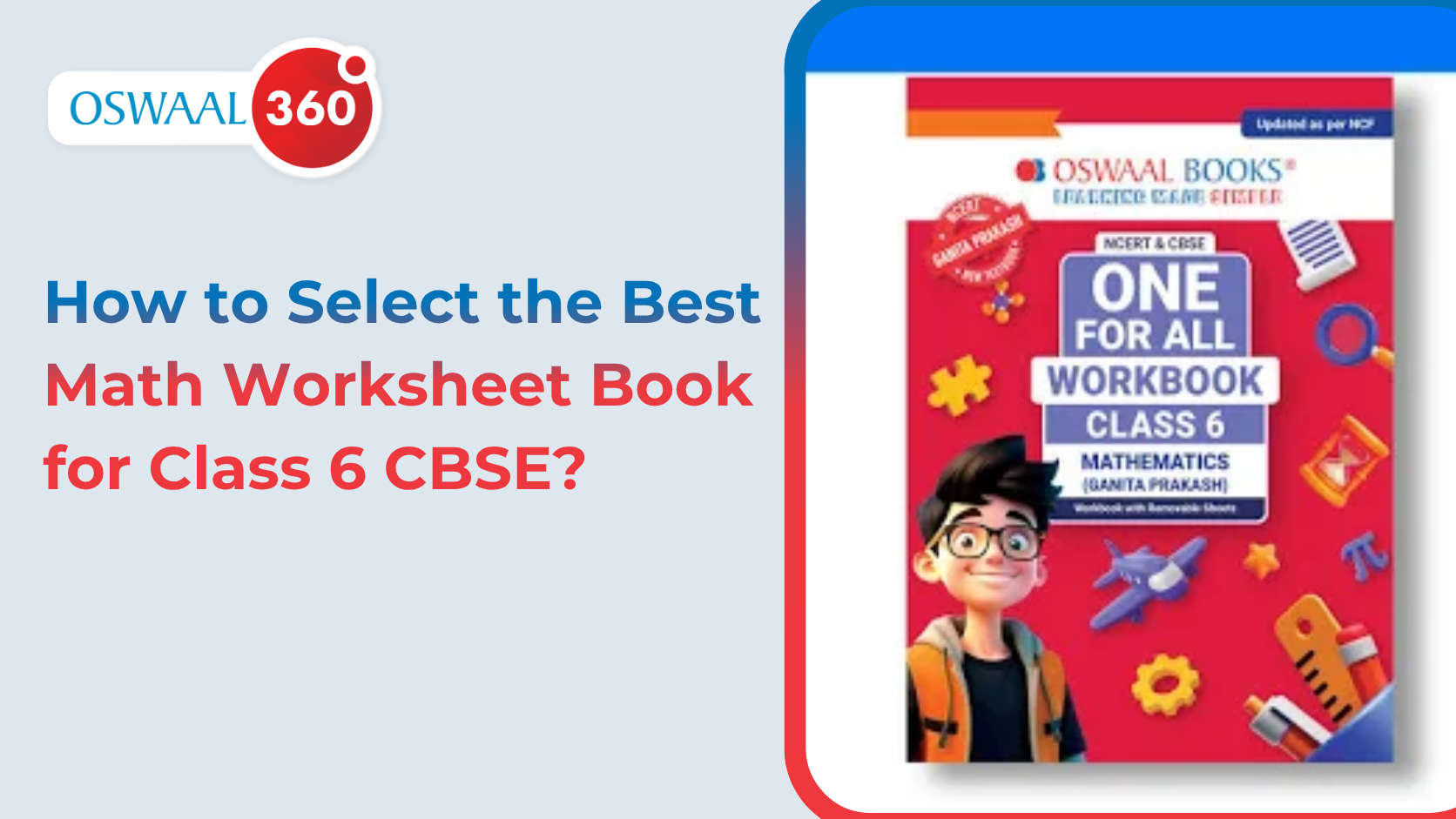
How to Select the Best Math Worksheet Book for Class 6 CBSE?
Class 6 is a very important milestone in the mathematical journey of a student. Concepts get more detailed, questions require more thought, and just...