






What Oswaal 360 has in store for you?
Champion all the trending Typologies of Questions
Strengthen your concepts with Detailed Solutions
Regular practice with Mock Tests and Weekly Practice Papers




Learning that empowers you at every step

Abundant Free Resources
Comprehensive Syllabus Coverage
Expertly Solved Papers
Free Mock Exams
Informative Videos, and More

Cutting-Edge Pedagogical Tools
Strengthen Your Comprehension with Cognitive Aids
Utilize Mind Maps, Mnemonics, and Concept Videos

Professionally Curated Content
Aligned with Current Exam Patterns and Marking Schemes
Unlock an Unrivaled Learning Advantage
The Oswaal Advantage
8 Mn Students
Largest Student network and community
300K Teachers
Most recommended resource by over 3 lakh Teachers
5000 Schools
Footprint across 5000 Schools across 550 Cities
Rich Editorial Heritage
Most preferred exam preparation resources.
Oswaal Editorial Board
Trusted by Students and Teachers alike, Oswaal Books is India’s no. 1 Educational Publisher. For more than 35 years, we have been helping students create better careers through our learning and educational resources.
Our content is authored by our Expert Editorial Board- a body formed by accomplished Teachers, Subject Matter Experts and Educationists from all over the country, with 100+ years of combined experience.
RECENT BLOGS
25 Aug 2026Riya Verma
Best ICSE Class 10 Books for Revision and Mock Test Practice
When it comes to the best books for Class 10 ICSE 2027, Oswaal Books are among the top recommendations, prepared around the latest ICSE syllabus with chapter-wise practice, varied question types, and full-length sample papers backed by clearly explained, step-by-step solutions. They help students strengthen concepts, improve speed & accuracy, practice exam-style questions, and build confidence through structured, self-paced preparation. This quick read will explain to you what to look for in ICSE Class 10 revision books and mock test books, how to use them effectively, and how they can be the perfect companion to score 95+ in the ICSE board exams.
Revision Books vs Mock Test Books: What’s the Difference for ICSE Class 10?
Revision books and mock test books serve two different purposes in ICSE Class 10 preparation. A good revision book helps you recall complex concepts within a time frame, without sinking into last-minute exam stress. Similarly, a good mock test book helps the student practice within real-exam conditions, improve time management & accuracy, and build confidence before the actual examination. Here’s the clear-cut difference between the two, to give a better picture of how both of them can be used–
ICSE Class 10 Revision Books
ICSE Class 10 Mock Test Books
Revise important concepts chapter by chapter
Practice within real-exam conditions
Identify frequently asked topics
Attempt complete papers within a fixed time limit
Practice diverse question formats
Develop pacing & stamina for the real exam
Strengthen weak areas
Identify areas where you are weak & need improvement
Improve speed & accuracy
Evaluate answer writing & presentation skills
Revisit key definitions, formulas, and concepts quickly
Analyse mistakes & track improvement with each test
The strongest preparation doesn’t come from choosing one over the other—it comes from using both strategically. Together, they support three essential stages of exam readiness: concept revision, targeted practice, and full-length timed mock tests, helping students move from understanding concepts to applying them confidently under exam conditions.
What to Look for in the Best ICSE Class 10 Revision Books?
Not every revision book is worth buying, or we would say, serves the same purpose. Before choosing one, students should look for features that actually support their preparation:
Alignment with the Latest ICSE Syllabus–The book must clearly follow the latest ICSE Class 10 syllabus and examination requirements. This reduces the risk of spending unnecessary time on irrelevant topics for the current examination.
Extensive Chapter-Wise Practice–A chapter-wise structured study approach makes the revision easier. Students can opt for a particular chapter, revise the concepts, and accordingly practice questions related to it.
Diverse Question Types–With the revised curriculum, a good ICSE Class 10 book, especially mock tests & revision books, must include competency-based, application-based, and higher-order thinking questions.
Detailed Solutions–Solutions should explain the approach rather than simply provide the final answer. This becomes particularly important in subjects like Mathematics, Physics, Chemistry, and Accounts, where understanding the method is often as important as reaching the correct answer.
Previous-Year Questions—Effective revision books for Class 10 ICSE 2027 must include PYQs, as they can help students understand the exam pattern, difficulty level, and repeating topics, enabling students to prepare more strategically for board examinations. Read More - How to Get 100 in ISC Class 12 Maths 2027: Step-by-Step Strategy
What to Look for in the Best ICSE Class 10 Mock Test Books?
A good mock test book should do more than provide a collection of question papers. It should help students experience the exam environment, assess their preparation, and improve their performance before the actual ICSE Class 10 Board Exams. Here are the key features to consider:
Full-Length Exam-Style Papers– Choose mock test books that include complete papers designed around the latest ICSE Class 10 examination pattern. This helps students practise managing the entire paper within the given time.
Latest ICSE Exam Pattern– The book should reflect the latest syllabus, question format, marking scheme, and assessment approach so that students practise questions relevant to the current examination.
Variety of Question Types– Look for papers such as Oswaal that include competency-based, application-based, analytical, and higher-order thinking questions to prepare students for different levels of questioning.
Balanced Difficulty Level– A good mock test book should offer a mix of easy, moderate, and challenging questions. This allows students to gradually improve their confidence while preparing for unexpected questions.
Self-Assessment & Performance Analysis– Mock tests should help students evaluate their preparation, identify weak areas, and track improvement across multiple attempts. This turns every practice paper into an opportunity to improve before the actual board exam.
Best Types of ICSE Class 10 Books for Revision & Mock Test Practice
Instead of looking for one book that does everything, students must rely on a small preparation toolkit based on their requirements.
ICSE Class 10 Question Banks
A Class 10 ICSE Question Bank is useful for chapter-wise revision and extensive practice. It can help students identify the types of questions asked from different chapters and test whether they can apply concepts independently. In this context, Oswaal ICSE Class 10 books are especially useful during the middle and final stages of preparation because they bridge the gap between traditional learning and board-level practice.
ICSE Class 10 Sample Papers
Sample papers are useful when students want to have the real exam feel before the actual boards. A good sample paper like that of Oswaal reflects the expected examination structure and includes a variety of questions, helping students practise under timed conditions, improve time management, assess their preparation, and build confidence.
ICSE Class 10 Solved Papers
Solved papers allow students to practise questions while also understanding how answers can be approached. They are particularly useful for subjects where answer presentation, step marking, explanation, and format matter. Oswaal ICSE books provide detailed step-by-step explanations that help students adopt the right approach, learn from mistakes, and improve their overall answer-writing skills.
Subject-Specific Revision Books
Different subjects require different revision strategies. For instance, Mathematics requires repeated problem-solving, while History & Civics look for the strong recall and answer presentation. For this, students can opt for the Oswaal Class 10 ICSE Maths book or the same for other subjects. Such a subject-centric approach will help them strategise their preparation, strengthen subject-specific skills, and revise more effectively.
A Smart Revision Strategy for ICSE Class 10
Using the right books becomes much more effective when combined with a structured revision plan.
Phase 1: Strengthen Concepts
Begin with your school textbooks and prescribed study material. Make sure your basics are clear before moving heavily into full-fledged mock tests.
Phase 2: Practise Chapter-Wise Questions
Use Oswaal ICSE Competency-Focused Question Banks and mock tests to get an idea of the exam pattern, identify high-weightage topics, and strengthen your preparation with targeted practice.
Phase 3: Solve Previous-Year Questions
Practice through Oswaal previous years’ solved papers to understand how concepts have been tested in real-exam conditions.
Phase 4: Attempt Full-Length Papers
Once your syllabus is completed, you must sit down solving sample papers under timed conditions.
Phase 5: Analyse and Improve
Maintain a book that contains mistakes that you’re making repeatedly. Before every new mock test, spend some time revisiting these weak areas.
Phase 6: Final Revision
In the final days, avoid trying to learn everything again from scratch. Focus on important concepts, formulas, difficult topics, previous mistakes, and questions that require repeated practice.
Subject-Wise Focus for ICSE Class 10 Revision
Each subject requires a slightly different approach.
Mathematics
Focus on formula application, calculations, problem-solving, and repeated practice. Oswaal Maths book for Class 10 can help improve speed and identify chapters that require additional practice.
Physics, Chemistry & Biology
Oswaal Class 10 ICSE Physics or other science subjects can help students combine conceptual revision with numerical, application-based, and diagram-based questions wherever relevant. Pay attention to definitions, processes, formulas, equations, and scientific terminology.
History & Civics
Focus on important events, concepts, causes, consequences, constitutional topics, and answer presentation. Practise writing structured answers instead of only reading the chapters repeatedly.
Geography
Along with conceptual understanding, practise maps, diagrams, data interpretation, and application-based questions wherever applicable.
English
Regularly practise grammar, comprehension, composition, and literature-based questions from the Oswaal ICSE Class 10 grammar book. Writing practice is especially important because knowing the content and presenting it effectively are two different skills.
Choosing the Best ICSE Class 10 Books for 2027
When it comes to selecting ICSE Class 10 books to study and practice tests, it is vital to go for books that correspond to your study trends, rather than collecting as many materials as possible. This is why a combination of Oswaal ICSE Class 10 Question Banks, previous years’ solved papers, competence-based question banks, and sample papers is the right way to go, as it allows you to go from perfecting your concepts to getting ready for your exams in the best possible way.
Revise materials to establish concrete understanding and address weaknesses, use previous year papers to see how the test is held, and take mock tests for time management, precision, and presentation of answers. The aim here is not to solve as many questions as possible, but instead to learn from every question, evaluate every mistake, and develop further after every test.
Work hard, stick to your study schedule, and keep trusting in your studies. With a structured Learn → Practise → Test → Analyse → Improve approach, you can make your ICSE Class 10 preparation more focused, confident, and exam-ready….Good Luck!
FAQs About ICSE Class 10 Books
1. Which are the best books for ICSE Class 10 revision?
Regarded as among the best ICSE Class 10 reference books, Oswaal books follow the current syllabus strictly and provide chapter-wise practice, competency-based questions, previous years’ questions, and elaborate solutions for the same.
2. Which is the best ICSE Class 10 Maths book for board exam preparation?
For ICSE Class 10 Maths preparation, Oswaal ICSE Class 10 is one of the best recommendations due to its comprehensive chapter-wise coverage, varying formats of questions, previous years’ questions, and solutions.
3. Are sample papers useful for ICSE Class 10 Board Exams?
Yes. The ICSE Class 10 practice paper enables students to write entire papers within the time frame, which helps them understand the format of the exam, learn time management, and know where they need more preparation.
4. How many mock tests should be attempted to prepare for ICSE Class 10?
There is no specific number for this. Instead of focusing on how many papers to practice, students must attempt mock tests on a regular basis, analyse their mistakes, and work on their weak points before the next attempt.
5. Are previous-year papers important for ICSE Class 10 preparation?
Yes. ICSE Class 10 Previous Years’ Solved Papers help students understand how different concepts have been tested in board examinations, practise actual exam-style questions, and become familiar with the difficulty and question patterns.
6. Which ICSE Class 10 books are best for competency-based questions?
Students should look for Oswaal ICSE Class 10 books with competency-focused, application-based, analytical, and higher-order thinking questions. These help students practise applying concepts rather than relying only on rote learning.
7. Is an ICSE Class 10 English Grammar Book necessary?
A dedicated ICSE Class 10 Grammar Book such as that of Oswaal can be useful for students who want focused practice in grammar, sentence structure, and language accuracy. Regular grammar practice can complement literature, comprehension, and writing preparation.
18 Aug 2026Riya Verma
UPSC Mains Revision Checklist for GS Paper 1, 2, 3 & 4
The UPSC Civil Services Mains examination tests the knowledge of the candidates across four General Studies papers—GS Paper 1, GS Paper 2, GS Paper 3, and GS Paper 4 — each carrying 250 marks and lasting three hours. Together, these four papers form the core of the nine-paper UPSC Mains examination, alongside Essay, two Optional papers, and two qualifying language papers. For effective preparation across these papers, aspirants can also refer to Oswaal UPSC PYQ books to understand the question pattern, identify recurring themes, and practise answering questions aligned with the Mains examination.
UPSC Mains demands refined descriptive knowledge from candidates within a limited time. At this stage, students struggle to write all answers in the three-hour exam and to structure responses with clear introductions, balanced arguments, and meaningful conclusions. On top of that, the vast syllabus makes regular revision overwhelming, and they also struggle to enrich their answers with relevant data, case studies, government reports, constitutional provisions, and current affairs. To sail through this ocean of struggles, what is expected from the aspirants are expected to opt for consistent answer-writing practice, effective time management, and quality feedback.
Above all, revision is what transforms UPSC Mains preparation into performance. This 3 min article can be your go-to read that breaks down a practical, paper-wise revision checklist for GS 1, GS 2, GS 3, and GS 4, along with a general framework you can use regardless of which stage of preparation you’re in.
Complete UPSC Mains GS Papers 1–4 Syllabus Breakdown
Here’s the subject-wise syllabus breakdown, before helping you with the revision checklist of the same–
GS Paper 1 — Indian Heritage & Culture, History, Geography of the World & Society
Broad Area
Topics Covered
Indian Culture
Salient aspects of Art Forms, Literature, and Architecture from ancient to modern times
Modern Indian History
Significant events, personalities, and issues from the mid-18th century to the present
Freedom Struggle
Its various stages and important contributors/contributions from different parts of the country
Post-Independence India
Consolidation and reorganisation within the country ( e.g., integration of princely states, linguistic reorganisation)
World History
Events from the 18th century such as the Industrial Revolution, World Wars, redrawal of national boundaries, colonization, decolonization; political philosophies like Communism, Capitalism, Socialism, etc. and their effects on society
Indian Society
Salient features, diversity; role of women and women’s organisation; population and associated issues; poverty and developmental issues; urbanization–problems and remedies
Social Empowerment
Communalism, regionalism, secularism
World Geography (Physical)
Salient features of physical geography (world)
Geography Resource Distribution
Distribution of key natural resources across the world (including South Asia and the Indian subcontinent); factors responsible for the location of primary, secondary, and tertiary sector industries.
Geophysical Phenomena
Earthquakes, tsunamis, volcanic activity, cyclones, etc.; geographical features and their locations; changes in critical geographical features (including water bodies and ice caps), changes in flora and fauna, and the effects of these changes.
GS Paper 2 — Governance, Constitution, Polity, Social Justice & International Relations
Broad Area
Topics Covered
Indian Constitution
Historical underpinnings, evolution, features, amendments, significant provisions and basic structure
Union & State Functioning
Functions and responsibilities of the Union and the States; issues and challenges about the federal structure; devolution of powers and finances up to local levels
Comparative Constitutions
Comparison of the Indian constitutional scheme with that of other countries
Separation of Powers
Between various organs; dispute redressal mechanisms and institutions
Government Policies & Interventions
For development in various sectors and issues arising out of their design and implementation
Governance & Welfare
Development processes and development industry — role of NGOs, SHGs, various groups and associations
Welfare Schemes
Schemes for vulnerable sections of the population by the Centre and States, and the performance of these schemes; mechanisms, laws, institutions and bodies for the protection of vulnerable sections
Social Sector Services
Issues relating to development and management of Health, Education, Human Resources
Governance & Transparency
E-governance applications, models, successes, limitations, and potential; citizens' charters, transparency & accountability, and institutional/other measures
Polity & Institutions
Structure, organization and functioning of the Executive and the Judiciary; Ministries and Departments
Constitutional & Statutory Bodies
Appointment, powers, functions and responsibilities of various Constitutional Bodies
Parliament & State Legislatures
Structure, functioning, conduct of business, powers & privileges, and issues arising from these
Representation of the People's Act
Salient features
Statutory, Regulatory & Quasi-Judicial Bodies
Their structure and functioning
International Relations
India and its neighborhood — relations; bilateral, regional and global groupings and agreements involving India and/or affecting India's interests
Global Institutions
Effect of policies and politics of developed and developing countries on India's interests; Indian diaspora
International Bodies
Important international institutions, agencies and fora — their structure, mandate
GS Paper 3 — Technology, Economic Development, Biodiversity, Environment, Security & Disaster Management
Broad Area
Topics Covered
Indian Economy
Issues relating to planning, mobilization of resources, growth, development, and employment
Government Budgeting
Current Events
Agriculture
Cropping patterns; types of irrigation and irrigation systems; storage, transport, marketing of agricultural produce and related constraints; e-technology in aid of farmers
Farm Economics
Direct and indirect farm subsidies, MSP; PDS — objectives, functioning, limitations, revamping; buffer stocks and food security; technology missions; animal-rearing economics
Food Processing
Scope and significance, location, upstream/downstream requirements, supply chain management
Industrial Policy & Growth
Effects of liberalization on the economy; changes in industrial policy and their effects on industrial growth
Infrastructure
Energy, Ports, Roads, Airports, Railways etc.
Science & Technology
Developments and their applications and effects in everyday life; achievements of Indians in science & technology; indigenization of technology and developing new technology
Awareness in Emerging Technology
IT, Space, Computers, robotics, nano-technology, bio-technology; issues relating to Intellectual Property Rights
Environment & Ecology
Conservation, environmental pollution and degradation, environmental impact assessment
Internal Security
Linkages of organized crime with terrorism; role of external state and non-state actors in creating challenges to internal security
Security Challenges
Challenges to internal security through communication networks, role of media and social networking sites; basics of cyber security
Border Security
Security challenges and their management in border areas; linkages of organized crime with terrorism
Security Forces & Agencies
Various security forces and agencies, and their mandate
GS Paper 4 — Ethics, Integrity & Aptitude
Broad Area
Topics Covered
Ethics & Human Interface
Essence, determinants, and consequences of Ethics in human actions; dimensions of ethics; ethics in private and public relationships
Thinkers' Contributions
Human values — lessons from the lives and teachings of great leaders, reformers, and administrators
Attitude
Content, structure, function; its influence and relation with thought and behaviour; moral and political attitudes; social influence and persuasion
Civil Service Aptitude
Aptitude and foundational values for Civil Service; integrity, impartiality and non-partisanship, objectivity, dedication to public service; empathy, tolerance and compassion towards the weaker sections
Emotional Intelligence
Concepts and their utility and application in administration and governance
Moral Thinkers
Contributions of moral thinkers and philosophers from India and the world
Public/Civil Service Values
Ethics in public administration — status and problems; ethical concerns and dilemmas in government and private institutions
Governance Ethics
Laws, rules, regulations and conscience as sources of ethical guidance; accountability and ethical governance; strengthening of ethical and moral values in governance
Probity in Governance
Concept of public service; philosophical basis of governance and probity
Anti-Corruption
Information sharing and transparency in government, RTI, codes of ethics, codes of conduct, citizens' charters, work culture, quality of service delivery, utilization of public funds, challenges of corruption
Case Studies
On the above issues
Realistic Revision Plan For UPSC Mains GS Paper–1,2,3 & 4
Revision is a very important aspect of UPSC Mains preparation. An efficient revision plan allows a candidate to recall concepts, strengthen ideas, detect weaknesses, and retrieve information. Below are steps providing a practical approach to revision of GS Paper 1, 2, 3 and 4.
GS Paper 1: History, Culture, Society, Geography
GS1 is quite extensive yet predictable – a range of themes are repeated every year in different forms.
Indian Heritage and Culture
Make a summary of various art forms (temples-Nagara, Veena, South Indian) and their characteristics.
Prepare a one-page summary of the ideologies of Buddhism, Jainism, and the Bhakti-Sufi movement along with their social and political impacts.
Identify some important personalities linked to culture and society in the course of the freedom struggle.
Modern Indian History
Divide your revision into five phases including the Revolt of 1857, moderate phase, extremist phase, Gandhian period, and events post-1935.
Remember the events that took place in their context, their leaders, and the importance of the event. To score well in this section, you can take help from the Oswaal Modern History book for UPSC.
Don't skip the often-neglected areas: peasant and tribal movements, press and education reforms, and the economic critique of colonialism.
Post-Independence Consolidation
Integration of princely states, linguistic reorganisation of states, and early nation-building challenges are recurring themes — revise them as a connected story, not isolated facts. Oswaal’s History Book for UPSC can help you connect these themes, strengthen your understanding, and revise them more effectively.
World History
Focus on causes and consequences rather than narrative detail: World Wars, colonisation and decolonisation, Cold War, and redrawing of national boundaries.
Indian Society
Revise core concepts — social empowerment, communalism, regionalism, secularism — with current examples you can cite.
Keep 2-3 recent illustrations ready for topics like women's issues, population, and urbanization, since examiners reward answers that connect theory with contemporary reality.
Geography
Physical geography (climate, geomorphology, ocean currents) needs conceptual clarity, not memorisation — diagrams help you recall faster than text.
For resource distribution and world geography, tie locations to reasons (why there, not just where).
Revise disaster-related geography alongside GS3's disaster management for cross-linking.
GS Paper 2: Governance, Constitution, Polity, IR
This paper rewards precision. Vague answers on polity and governance lose marks fast because the framework — articles, bodies, mechanisms — is meant to be exact.
Governance
List and categorize various government schemes by sectors such as health sector, education, welfare programs, and digital governance. Include objectives of implementation and provide a critical comment regarding the operations of each scheme.
E-governance should be updated by including the latest developments in the field of accountability and transparency.
The Indian Constitution
Instead of providing a straightforward list, take a comparative approach and prepare a timeline for the basic structure doctrine, relevant articles, amendments, and judicial decisions.
Make a chart of comparison on Fundamental Rights versus Directive Principles and features of parliamentary versus presidential system adapted in India.
Social Justice
Structure revision around vulnerable groups — women, children, elderly, disabled, minorities — and the specific policy/legal architecture for each.
Health and education sector reforms deserve a dedicated revision pass since they appear almost every year in some form.
International Relations
Revise India's relations with major powers and neighbours through a "interests-issues-recent developments" template for each country or region.
International institutions and India's role in them should be revised alongside recent summits or agreements — this is the fastest-changing part of the syllabus, so this is worth a final current-affairs sweep.
Polity Bodies
Revise composition, powers, and appointment process for constitutional bodies (Election Commission, CAG, UPSC) and statutory/regulatory bodies together — from Oswaal polity book for UPSC.
GS Paper 3: Economy, Environment, Security, Technology
GS3 has the most direct link to current events, so your revision here should run parallel to a current-affairs recap.
Indian Economy
Make sure to define core terms such as inflation, fiscal policy, banking, and budget in a simple one-liner.
Update relevant data related to growth, unemployment, and fiscal indicators - rough figures will do, but do not leave them blank.
Agriculture: it would be good to revise cropping patterns, MSP, food processing, and irrigation together, as many questions combine at least two of them.
Science and Technology
Emphasize usage and relevance rather than technicalities - biotechnology, space, IT, and defense technology must have one recent achievement and policy aspects ready.
Environment and Biodiversity
Go through major environmental treaties, India's climate commitments, and efforts in preserving biodiversity as one narrative.
Keep a list of recent environmental issues in the news — this section rewards current awareness more than static facts.
Internal Security
Revise the sources, patterns, and state responses to major internal security challenges (left-wing extremism, border security, cyber security) with a consistent problem-response-way forward structure.
Disaster Management
Revise the disaster management cycle (mitigation, preparedness, response, recovery) as a framework you can apply to any type of disaster the question throws at you.
GS Paper 4: Ethics, Integrity, Aptitude
GS4 is the paper most people under-revise because it feels "common sense." That's exactly why a structured revision matters here.
Theoretical Framework
Condense the important ideas and concepts of a number of thinkers and different ethical philosophies (deontology, utilitarianism, virtue ethics) in one-line summaries. It is necessary to master these ideas before you start referring to them in your paper.
Have clear definitions of the important terms: integrity, probity, emotional intelligence, aptitude, because examiners may ask for this information directly.
Applied Ethics
Develop an understanding of ethics in governance: corruption, accountability, transparency, and civil service principles with examples of real-life situations.
Study the relationship between private and public in the administration in addition to patterns of case studies. Try to analyze 8-10 case studies and write down the appreciated answers.
Case Studies
Create your own checklist in order to analyze any case study: identify different parties involved, as well as the basic ethical dilemma; evaluate all available alternatives, and make your choice.
Find examples of other famous personalities or civil servants who showed ethical behaviour or integrity.
We’re With You on Your UPSC Journey, Every Step of the Way
Revising GS Papers 1, 2, 3, and 4 is not simply about re-reading the material. Instead, it means transforming the theoretical knowledge you have gained throughout your studies into recall and formal writing that is suitable for exams. You must treat the revision checklists given above as living documents: tick the items only when you can comfortably reproduce them in an exam situation, keep the current affairs linked to static subjects, and adopt a consistent study approach. Because the final stage before Mains is clearly not the time to open a new textbook, it’s time for patching any holes in your knowledge, polishing your writing skills, and making sure that you revise thoroughly. Alongside this, trust reliable learning resources such as the Oswaal UPSC PYQ books that can help you identify repeated topics, extensive previous years' questions practice, toppers' tips, and more.
Remember, You've Come This Far — Not For the Sake of Coming. Stay consistent, trust your preparation, and walk into the UPSC Mains with confidence. Because we believe that your hard work deserves your best attempt….Good Luck!
Recommended UPSC Books | Study Materials
Buy UPSC Books
Buy UPSC Previous Year Solved Papers
Buy NCERT Books for UPSC
Buy UPSC Mock Test Sample Papers
Buy UPSC MCQ Powerbank Books
Buy UPSC Mains Textbooks
UPSC Syllabus
UPSC Exam Pattern
UPSC Subject-wise Weightage
UPSC Admit Card
UPSC Cut Off
UPSC CSE Result
Are You a Teacher? Apply for FREE UPSC Specimen Books For Teachers from our end.
Frequently Asked Questions (FAQs)
Q1. When should revision begin in terms of number of days before the UPSC Mains exam?
Successful UPSC candidates start their preparations about 45-60 days prior to the examination, which is after doing at least one complete reading of the syllabus, enabling them to cover each topic at least twice before the examination.
Q2. Which GS paper should be revised first?
There is no correct answer to this; however, most candidates take GS 2 or GS 3 for the purpose of revision, as these are most current-affairs oriented and also change the most, keeping GS 1 (largely unchanging) and GS 4 (application-based) papers for the end.
Q3. How much time should be devoted to preparation for GS 4?
GS 4 preparation usually requires less time for theory and focuses more on practical aspects. This means that candidates do spend about 20%-30% of their GS 4 preparation time studying theoretical aspects and the rest of it solving case studies and previous years’ questions.
Q4. Should I make fresh notes during revision or use existing ones?
Use existing notes wherever possible. Making fresh notes during revision wastes time; instead, add sticky annotations or a summary sheet for each topic to reinforce recall.
Q5. How important is current affairs integration in the final revision phase?
Extremely important, especially for GS 2 and GS 3. In the last month, revise the previous 12 months of current affairs and consciously link each item to a static topic in the syllabus.
Q6. Is answer writing more important than reading during revision?
Yes. In the final phase, the ratio should shift toward roughly 60% answer writing and 40% reading, since Mains ultimately tests presentation as much as knowledge.
14 Aug 2026Riya Verma
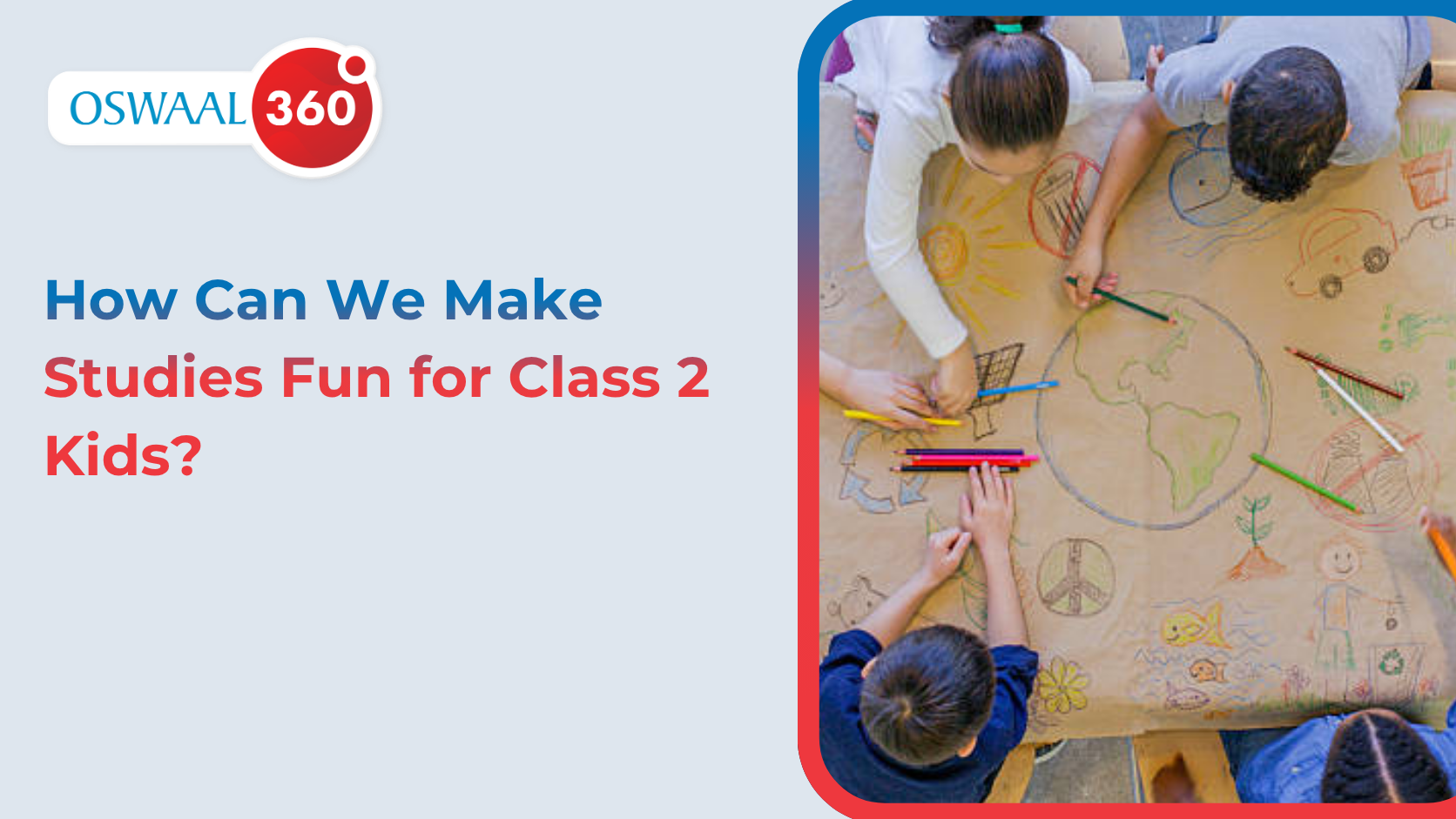
How Can We Make Studies Fun for Class 2 Kids?
You sit down to study with your class 2 child; after 10 minutes, they begin to fidget, stare at the wall or ask for a break. Sounds familiar? Kids in class 2 have very short attention spans, and long sessions lose them quickly. They learn best when they move, touch and play, not when they sit and listen.
8 Aug 2026Riya Verma
How do I choose the best CTET books for Paper 1 (Primary Level)?
“Which is the best CTET book to buy?” Most common question aspirants ask. There are so many books in the market that claim to be the best. It’s easy to end up with books that create more confusion than confidence.
Before buying CTET books, you must know if the book is worth buying. This guide discusses important factors to consider so that you can select books that will truly help you in preparing for the CTET 2026 exam.
What Makes A CTET Paper 1 Book Good?
Covers latest CTET 2026 syllabus. CTET syllabus changes time to time. A book based on an old syllabus wastes your time on topics that no longer matter and misses the ones that do.
Follows latest exam pattern. Marking scheme, difficulty level and format of questions change. Your book should be written in the current trend, not 3 years ago.
Concept explained first. CTET is about understanding, not memorisation. A book that explains the “why” of a concept allows you to answer questions that are framed in new ways, not just the questions you have seen before.
Practise questions chapter-wise. If you read the theory but don’t do any practice questions, you will have gaps in your knowledge that you won’t realise are there until the day of the exam.
Previous Years CTET Questions Answers. PYQs show you what examiners actually ask and how they ask it, and where they focus.
Detailed explanation of the answers. If you get it wrong, a right answer without an explanation teaches you nothing.
Updated as per NCF/NEP changes. Insofar as CTET is based on current education policy, your book should reflect this policy.
How to Select Books for Every CTET Paper 1 Subject
Child Development & Pedagogy (CDP)
CDP is the backbone of Paper 1, so check what to look for before buying:
Covers both child development theories and inclusive education
Clear explanation of learning and pedagogy concepts, rather than just definitions
Case study-based questions, as CDP increasingly tests on application rather than recall
A balance between theory and classroom practice issues
Language I
When choosing a Language I book, use this checklist:
Rules of Grammar, With Examples, Not Rules Only
Pedagogy of language teaching covered in depth, as this section carries real weight
Passage Comprehension Exercise
Questions mirroring the actual CTET question pattern
Language II
Select the language you want to try. Search for:
A book that is specific to your chosen language, not a generic multi-language guide
Linguistic and grammatical training are given equal importance
Practise passages in that particular language
Clear translation and explanation where the book uses English as a support language
Maths
Good features of a Maths Preparation book are:
Coverage of content (numbers, geometry, measurement) and pedagogy of mathematics
Problem-solving step-by-step, not just final answers
Questions on teaching methods and common mistakes of students, as CTET tests how you would teach and not just what you know
Sufficient practice sets to gain speed and accuracy
Environmental Studies (EVS)
An ideal EVS book should contain:
Content that links environment, science and social studies as EVS does in the real classroom
Activity based and integrated approaches to EVS teaching and pedagogy
Application questions in real teaching situations
Content updated to the present EVS curriculum
Checklist Before Buying CTET Paper 1 Book
Run through this list before paying for any book:
Latest Edition
Complete syllabus coverage
Error-free content
Practice sets included
PYQs included
Mock test available
Easy language
If a book fails in two or more of these points, keep looking.
Should You Buy a Complete Book or Subject-wise Books?
Either approach will work, depending on where you are in your preparation.
A single comprehensive book is enough if you are starting from scratch, if you want one style of explanation across subjects or if you want a lighter bag and a simpler revision plan.
When you’re weak in a specific subject and need deeper coverage, you’ve already covered the basics and want advanced practice, or you find a particular subject’s content thin in the comprehensive book, subject-wise books are a better choice.
Many aspirants take one all-in-one book for their first read through and then go for a subject wise book for the areas they find difficult.
Print Books Vs Digital Resources
Print books are good for deep reading, for note-making and studying without the screen and screen fatigue. Many candidates still prefer to flick through the pages when revising.
Digital resources are excellent for quick access, searchable content and practice on the go. In digital format, mock tests and PYQ banks are easier to attempt as you get instant scoring.
If you can do both, do both. Read concepts from print book and use digital mock tests and PYQ platforms to track your progress and weak areas. Neither format is a substitute for the other, they complement different aspects of your preparation.
Common Mistakes to Avoid While Choosing CTET Books
Buying too many books. More books don’t usually mean better prep. They mean more time lost explaining and changing styles.
Buying older editions. An older edition may have syllabus gaps you won't notice until you are well into preparation.
No PYQs. If you don’t solve previous year questions, you are missing a direct window of what the exam actually asks.
More than one author on the same subject matter. Different authors explain the same concept in different ways. Switching between them leads to confusion instead of clarity.
Book with no practice set. Theory without practice does not prepare you for the real format of the exam.
How Many Books are Sufficient for CTET Paper 1?
CTET can be cleared without a stack of books. Most of things you need are covered in one book for all 5 sections and a separate PYQ and mock test book. Only add a subject-specific book if you have a real gap in your comprehensive book, not because a friend recommended a second opinion. Fewer books read well beats more books read halfway.
Conclusion
Quick checklist for the right CTET Paper 1 books is: Updated syllabus, PYQs, mock tests, and clear explanations. You don’t need every book on the shelf; just one that covers all five sections well, and subject-specific book where you really need it.
Check the list before you buy; don't buy old editions, and give practice as much weight as theory. Oswaal CTET PYQs are designed around this same approach, so you can spend less time comparing books and more time actually preparing.
Frequently Asked Questions
How to choose the best CTET Paper 1 book?
Look for the edition year, syllabus coverage, PYQs, mock tests and explanations being self study friendly. Cross check with the above checklist before you buy CTET books.
Is one book sufficient for CTET Paper 1?
Yes, if it is a complete book with all 5 sections with enough practice questions and PYQs. Buy subject-wise book only where gaps are found.
Which is the best CTET previous year question book?
Oswaal CTET PYQs gives you the real difficulty level and question pattern. No amount of theory can substitute that.
Is it possible to prepare CTET Paper 1 only with NCERT books?
NCERT books form the basis of EVS and Mathematics, but they do not have the required pedagogical depth for CTET. By reading NCERT and a particular book for CTET preparation, thorough coverage is possible.
5 Aug 2026Riya Verma
Olympiad Exams Preparation for Class 5 2026-27: Maths, Science, & English Strategy
In the year 2026-27, children will be required to have a slightly better and more structured approach when they are sitting for the Olympiad exams in Class 5 because there will be a change in the paper pattern, from the shorter junior level paper to the longer and more advanced paper pattern for higher classes. Olympiad Preparation for Class 5 should be done with deep understanding of the concepts of Maths, Science and English, plus regular timed practice as there is an increase in the length of the paper and the topics in this year's Olympiad. Now children can easily manage the bigger syllabus with a consistent and planned Class 5 Olympiad Exam strategy.
3 Aug 2026Riya Verma
JEE Main 2027 Mock Test Dates: When to Start and How Many Mock Tests to Attempt?
What if you are scoring 180 in mock tests and only 120 in actual JEE Main? Most of the time, the problem is not your preparation, but your mock test strategy.
31 Jul 2026Riya Verma
Best Subject-wise Books for Indian Air Force Group X & Y Exam Preparation
Getting into the Indian Air Force is a dream for many young students across India. Whether you want to join as a technical trade (Group X) or a non-technical trade (Group Y), preparing with the right study material is the first and most important step. This blog will help you understand the exam structure, syllabus, and the best books to use for your preparation, all in simple language.
What Is the Indian Air Force Group X and Y Exam?
The Indian Air Force conducts a recruitment exam called the Agniveer Vayu exam (previously known as Airmen Selection) under the Agnipath Scheme. Candidates can apply for the following:
Group X (Technical): Covers Physics, Mathematics, and English
Group Y (Non-Technical): Covers Reasoning & General Awareness, and English
Group X & Y (Both): Candidates can appear for both groups together
The exam is conducted online and is divided into phases, including a written test, physical fitness test (PFT), and medical examination.
Air Force Y Group Syllabus: What Do You Need to Study?
Before picking any Air force y group syllabus book, you must understand what topics are asked in the exam.
Group Y Syllabus Topics:
Subject
Topics Covered
English
Grammar, Vocabulary, Comprehension, Tenses, Error Detection
Reasoning
Verbal & Non-Verbal Reasoning, Analogies, Series, Coding-Decoding
General Awareness
Current Affairs, History, Geography, Science, Static GK, Sports
Military Awareness
Indian Air Force structure, defence news, ranks, military history
Group X Syllabus Topics (Additional):
Subject
Topics Covered
Physics
Mechanics, Electricity, Magnetism, Optics, Modern Physics
Mathematics
Algebra, Trigonometry, Calculus, Probability, Coordinate Geometry
Why Choosing the Right Book Matters
Many students end up studying from too many books or from some general competitive exam books that do not have the Air Force exam pattern, which is a big mistake. The best Air Force book should contain the following:
Contains the exact syllabus of the exam
Contains Practice questions in the same format as the real paper
Has Previous year questions for reference
Has simple and clear language for concepts explanation
Best Subject-wise Books for Air Force Group X & Y
Here is a clear, subject-by-subject guide to help you choose the right study material.
1. English For Both Group X and Group Y
English is asked in both groups and is one of the easiest sections to score well in if you prepare regularly.
What to study:
Parts of speech (Nouns, Verbs, Adjectives, Adverbs)
Tenses and their correct usage
Active and Passive Voice
Direct and Indirect Speech
Synonyms, Antonyms, and One-word Substitution
Reading Comprehension
Error Spotting and Sentence Correction
Recommended approach: Use any good Indian Air force book that is specifically made for Agniveer Vayu and covers all English grammar topics with practice sets. Look for books that have solved examples and chapter-wise exercises. Avoid using general English grammar books meant for other competitive exams; they go beyond what is needed.
2. Reasoning & General Awareness Key for Group Y
This section is the most important for Air force y group best book seekers. Reasoning and GK together carry a big weightage in the Group Y paper.
Reasoning Subjects to be covered are the following:
Number Series
Letter Series
Analogies
Coding-Decoding
Blood Relations
Direction Sense
Venn Diagrams
Non-Verbal Reasoning
General Awareness Subjects to be covered are the following:
Indian History
Indian Geography
Indian Polity
General Science
Current Affairs
Sports, Awards, Books & Authors
Defence and Military Awareness
Recommended approach: The best Air force group y book for this section should have both theory and MCQ practice. Make sure the book has a dedicated section on Military Awareness and Defence GK, as this is unique to Air Force exams and often ignored by students.
3. Mathematics: Important for Group X
Mathematics in the Group X paper requires strong conceptual clarity. This is often the deciding section for technical trade candidates.
Topics Covered:
Sets, Relations and Functions
Trigonometry
Algebra and Quadratic Equations
Permutation and Combination
Probability
Matrices and Determinants
Differentiation and Integration (Calculus)
Coordinate Geometry (Straight Lines, Circles, Parabola)
Complex Numbers
Sequences and Series
Recommended approach: For the Air Force x group book on Mathematics, choose a book that strictly follows the Air Force exam level; Class 11 and 12 NCERT Mathematics is the base. After clearing your concepts from NCERT, move to an Agniveer Vayu-specific Mathematics practice book with topic-wise MCQs.
Tip: Always solve NCERT examples and exercises first. They cover 60–70% of the mathematical concepts tested in Group X.
4. Physics: For Group X Only
Physics in the Air Force Group X exam is based on Class 11 and 12 level concepts.
Important Topics:
Laws of Motion
Work, Energy and Power
Gravitation
Waves and Sound
Current Electricity
Magnetic Effects of Current
Electromagnetic Induction
Ray Optics and Wave Optics
Dual Nature of Radiation
Atoms and Nuclei
Semiconductor Devices
Recommended approach: Start with NCERT Physics (Classes 11 & 12) for concept building. Then use a dedicated Air force xy group book that has Physics MCQs in the exact Air Force exam format. Focus on numerical problems as they are frequently asked.
How to Use Agniveer Air Force Previous Year Question Papers
No preparation is complete without solving Agniveer Air Force Previous Year Question Papers. These papers are one of the most valuable resources because
They show the exact type and difficulty of questions asked
You can identify which topics are repeated most often
They help you manage your time during the actual exam
They give you a real feel of the paper pattern
Best Preparation Tips for Air Force Group X and Y Exams
Beyond books, your study strategy matters a lot. Here are some practical tips:
Make a timetable
Divide your day into subject slots. For Group X, more time is given to Physics and Mathematics. For Group Y, allocate an equal amount of time to Reasoning and GK.
Focus on NCERT First
NCERT books are the base for Physics and math. Don’t skip them, even if you are confident.
Read Newspapers Daily
For Current Affairs and Military Awareness, read a national newspaper, or you can go with some reliable current affairs app on a daily basis.
Practice Reasoning Daily
Reasoning is a skill that improves only with daily practice. Solve at least 20–30 reasoning questions every day.
Revise Regularly
Many students study a topic once and move on. Regular revision is what helps you retain information during the exam.
Take Mock Tests
Apart from previous year papers, take full-length mock tests online. Many platforms offer free mock tests for Agniveer Vayu.
Exam Pattern at a Glance
Group
Subjects
Number of Questions
Duration
Group X
English, Physics, Mathematics
70 Questions
60 Minutes
Group Y
English, Reasoning & GK
50 Questions
45 Minutes
Group X & Y
English, Physics, Mathematics, Reasoning & GK
100 Questions
85 Minutes
Note: There is negative marking of 0.25 marks for each wrong answer. Attempt only questions you are reasonably confident about.
Physical and Medical Preparation
Books and written preparation are only one part of the selection process. You also need to prepare for:
Physical Fitness Test (PFT): 1.6 km run, push-ups, sit-ups
Medical Examination: Vision, height, weight, and overall health checks
Start running and physical training alongside your studies so you are ready for all stages.
Read Also : Agniveer Eligibility Criteria 2026 – Army, Navy & Air Force Qualification Requirements
The Bottom Line
The preparation for the Indian Air Force exam is not easy, and you should have the right material for study and keep on working. Refer to subject-wise best u books for the IAF Exam and practice. Agniveer Indian Air Force Books with Previous year papers and keep revising your weak areas. All that is required is a little planning and a lot of work, and you can definitely make your dream of serving the nation in uniform come true.
TESTIMONIALS
Nasir
It was an amazing experience referring to Oswaal's books. They helped me a lot. I truly say that they were the guiding path to us. The content and explanation part were extraordinary. Not only teachers, even students also utilized them.
Soma Chakraborty
Hello, as a social science teacher of class 9,10 and geography teacher of class 11 and 12 , I found oswal books, question banks and sample papers the best guide for the students to prepare themselves for examinations.
Veer Pratap
The matter is well organised , for board students. More solved previous solved papers must be included. Nice experience teaching with oswal books
V V Durga
I, V V Durga Bhavani, TGT(Mathematics/Physics) strongly recommend previous year test papers in not only Mathematics & Science but for every subject.
I purchased English, Mathematics, Science & Social Science combo and Hindi-A in Amazon for my child. I recommended the same to the students of my class. For slow learners, I told them to buy Oswaal books to get passed , and for high achievers I recommended your books for getting out of out marks.
I really like your publications. As a teacher I am so happy to recommend to my students also.
Chandra Prakash
Oswal book, based entirely on the subject matter and curriculum, plays an important role in the success of the students. This is an amazing, incredible and unimaginable book.
Even by studying in less time, students can achieve significant success and get good marks.
Adil ali
Oswaal Exam preparation books have served as valuable resources in enhancing teaching strategies by providing structured content aligned with relevant syllabus and exam formats. Additionally, these books include practice questions, exercises, and sample exams, which teachers can integrate into their lesson plans to reinforce concepts and assess student understanding.
Salil Upadhyay
Your commitment to creating resources that not only enlighten but also empower students is truly commendable. Each book you publish is a beacon of knowledge, meticulously crafted to foster understanding, inspire curiosity, and equip young minds for future challenges. Your work is not just publishing; it's a profound contribution to education, transforming books into powerful tools for growth and success. Thank you for being a pivotal part of students' educational journeys and for continuing to enrich the academic landscape with your invaluable publications
Sthipranjaya
It is indeed a great source for me to revise a set of questions with updated pattern. I am really thankful to team oswaal for preparing such a wonderful book.
Jagdesh Jangara
Oswaal's books cover all types of expected questions related to exam & with simple and clear language students take interest so secure high & considerable marks in exam
Subject matter clarify all syllabus clearly
Rakesh Verma
I have been following ur books since 2019, for political science teaching, I have recommended them every year to my students, They are very useful for them
Keep it up
Sariak
Your Exam Preparation Books have enriched my teaching strategies by providing comprehensive content and structured practice materials aligned with curriculum standards, allowing for targeted instruction and efficient lesson planning.
Sugandhi
Oswaal book has been very important to boost confidence of students, grammar, mind- maps summary, self Assessment papers with key answers, for English language is osim.great help for students and teachers to make it easy way to reach students goal.
Mr. Katariya
Your exam preparation books help me in my teaching strategies in many ways like in your books thre are a lot of question as Reason Assertion and case based. So that it was easy to me in last time to prepare my students for final exam.
Manjula
Indeed I am greatly indebted to you all for keeping me ahead of others in every exam update with your material.
Oswal material is very much helpful to me as a teacher of English to give regular practice to my learners to enhance their competencies in every skill of language learning.
Krishna
It feels great to hear from the students that all the conceptual questions and mcqs came from oswaal question bank. They got the confidence before entering the exam hall courtesy to this oswaal question bank
Sonia Sharma
The books provided by you were really a great help to understand the changing strategy of CBSE board exams.
Books were designed as per the latest pattern for providing appropriate learning to the students. students were able to boost up their confidence as they get to know the latest pattern and practice material for complex questions which are really tough to understand without the appropriate study material.
Bharat Bhushan
It was a good experience to teach with the help of oswaal publishers I am glad to join the publishing house from the last four years.