


ICSE Class 10 Syllabus 2026: Powerful Shortcuts Nobody Shares
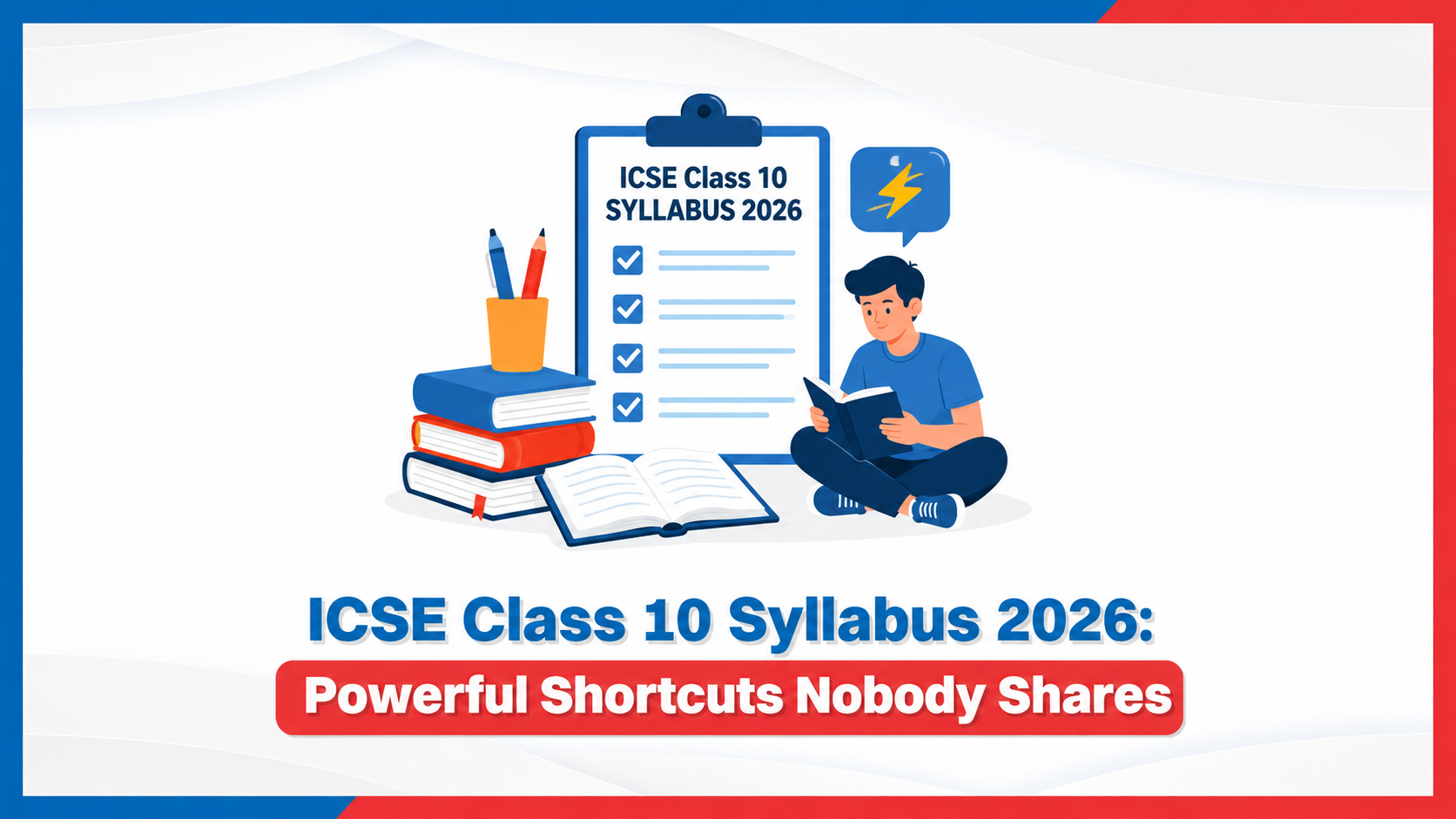
Most students generally view syllabus as a formality; they look at it once and never open it again. Sorry, you’re wrong.
Syllabus tells you what will be on the exam. It’s a map, not a bureaucratic document. Students who study with it open beside them know where they’re going. Students who don’t pay attention to it often spend weeks on topics that are of little weight.
Here’s the shift: don’t think of the syllabus as a checklist, think of it as a strategy guide.
Must Read : How to Create an Effective Mock Test Routine for ICSE Class 10?
Shortcut #1: Identify the Most Important Chapters
Not all chapters are equally important in exams. Certain topics appear each year in multiple question formats. Others pop in rarely.
Go through the syllabus and cross-check with past papers. You will see patterns - some units garner more questions, more marks, more attention. Once you see those patterns, you can then distribute your time accordingly. 70% of your work on high yield topics and 30% on the rest. That alone can push your score up quite a bit.
Shortcut #2: Transform the Syllabus into a Weekly Game Plan
Divide the whole syllabus by the number of weeks left before the exam. Give each chapter a particular week. Create a weekly goal that is simple enough to complete but large enough to make progress.
When you reach your weekly target, you feel in control. If you fall behind, you know exactly how you need to catch up. That eliminates the panic of vague, open-ended studying.
Shortcut #3: Use Your ICSE Class 10 Books Strategically
Your textbooks have more material than what is tested on the exam. Authors provide background material, extended examples, and supplementary content – useful but not all exam-relevant.
Open the ICSE Class 10 books with syllabus in hand. Review the topics and sub-topics provided in the syllabus for each chapter. Give them your whole attention. Ignore or skim what is out of syllabus boundaries. This keeps your reading targeted and your time productive.
Shortcut #4: Link Similar Topics Together
Since most students study each chapter in isolation, the natural links between subjects in the ICSE syllabus are missed.
In Science, ideas in one chapter often directly build on those in another. There are methods in Maths that are common to subjects like algebra and quadratic equations. In History, events in one period explain the next one. When you see these links, read the related chapters at the same time.
So your brain remembers information better when it is sitting in context instead of in isolation. But revision speeds up, too, as one concept opens up several others.
Shortcut #5: Find Exam Secrets in a Question Bank
A Class 10 ICSE question bank does what no textbook can – it shows you what the exam actually looks like.
Before you study a chapter, go through the question bank, not after. Notice how the questions are phrased, what sub-topics are tested, and the weightage given to each type of question. Then, when you are studying the chapter, you know what to look for. You’re not reading to get the full picture; you’re reading to answer specific questions. That focus makes your study sessions more to the point.
Shortcut #6: Develop a One-Page Revision Cheat Sheet
Create one page per topic, containing the most important information – key formulas, definitions, dates, diagrams, and concepts.
Don’t wait until the night before the exam to do this. Make it as you go through each chapter. You will have a complete set of cheat sheets prepared by the time you get through the syllabus. These pages are all you need in the last days before the test. No flicking through textbooks, no re-reading chapters – just a quick, calm revision.
Shortcut #7: Begin With Questions, Then Research the Topic
Most students read the chapter and then attempt the questions. Try the other way around.
Before you open the chapter, glance over the questions that are linked to a topic. That tells you what the examiner is concerned about. Then, as you read the chapter, your brain filters the content – it picks out what is relevant and ignores what it isn’t. You study with a purpose, not just a hope that you're covering the right stuff. Students who use this method usually find, because their reading is more focused, that they need less time per chapter.
Conclusion
Use the syllabus as a ‘template’ for your weekly schedule. Open the ICSE Class 10 books only for the topics highlighted by the syllabus. Before each chapter, take a look at your question bank for Class 10 ICSE to get an idea of what the exam is looking for. As you complete each topic, add the key points to your one-page cheat sheet. Link related chapters as they come up close together in the syllabus.
Once every couple of weeks, do a whole round of revision, using only your cheat sheets and the question bank. This keeps older material alive without sacrificing your forward momentum.
The students who have the most time to spare are not the most thorough in their studies. They are the ones who view the syllabus as a tool, not a list of things to do. Begin there, and the rest will come.
Other Recommended Books | Study Materials
|
ICSE Question Banks Class 10 | For 2027 Board Exams |
|
|
ICSE Specimen Sample Papers Class 10 | For 2026 Board Exams |
|
|
ICSE Previous Yearwise Solved Papers Class 10 | For 2026 Board Exams |
|
|
ICSE Class 10 Syllabus | For 2026 Board Exams |
|
|
ICSE Class 10 Notes | For 2026 Board Exams |
|
|
Free CBSE ICSE Specimen Sample Books for Teachers |
Practice Comprehensively with Oswaal360 ICSE Online Courses for Class 10 Board Exams 2027
Practice Now With Free Oswaal360 Online Mock Test for ICSE Class 10 Board Exams 2027
Are You a Teacher? Apply for FREE ICSE Class 10 Specimen Sample Books For Teachers from our end.
Recent Posts
Best Books for CAT 2026 – Honest Reviews from Aspiring IIM Students
Every CAT aspirant has faced this dilemma. Standing in front of a shelf full of preparation books, wondering which ones will actually help. Advice...
What is the best way to prepare for Class 8 exams?
Class 8 is that typical year where students may not have the pressure of board exams, but it is crucial to lay a strong foundation for the upcoming...
AFCAT 2026 AFSB Interview: What to Expect After Clearing Written Exam
Not everyone who dreams of the sky gets to fly it. The aspiration of wearing those wings on the shoulders begins long before the actual selection day...
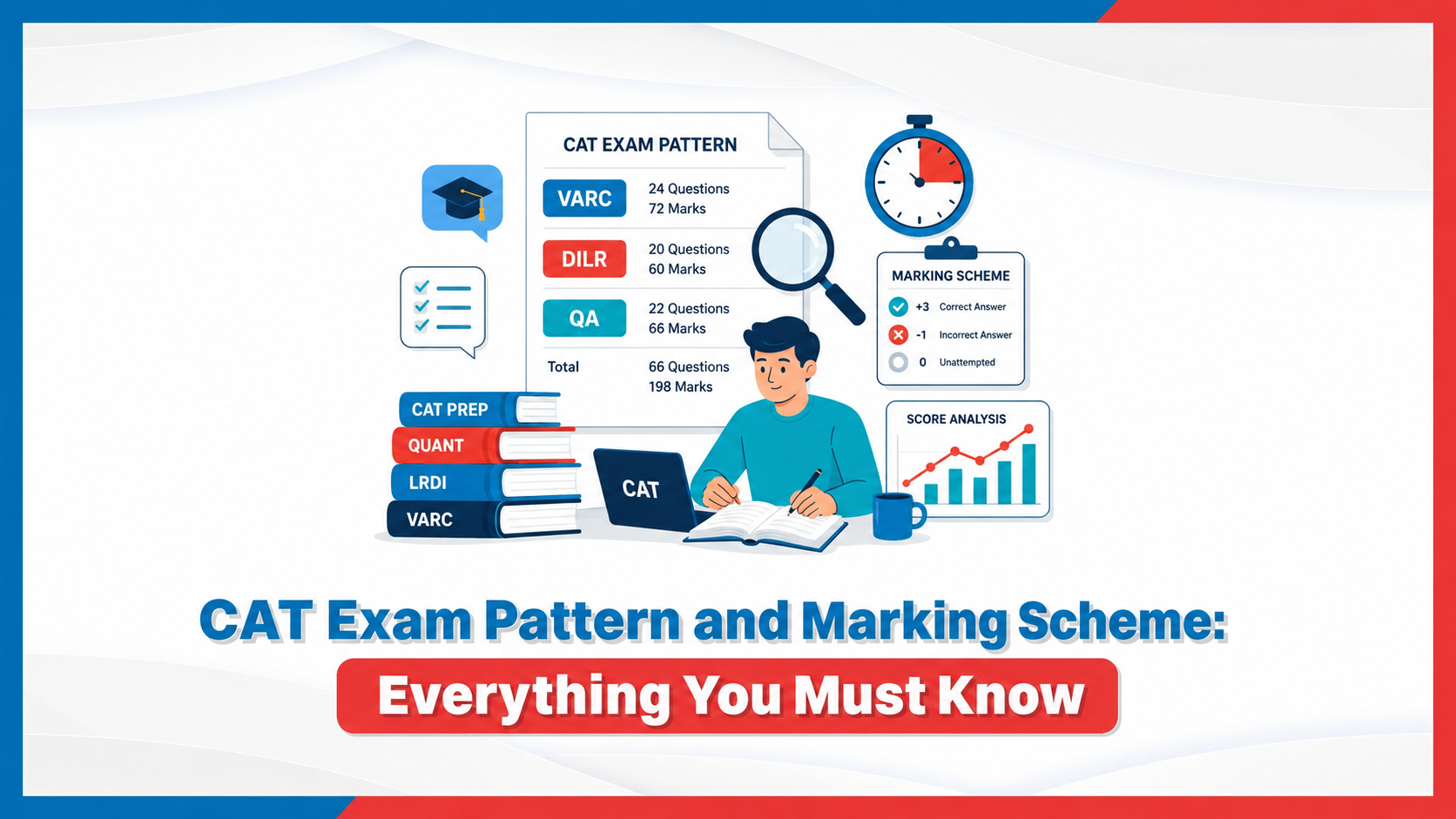
CAT Exam Pattern and Marking Scheme: Everything You Must Know
With acceptance rates at top IIMs often falling well below 2% of the total CAT applicant pool, the competition is undeniably intense. Every year,...
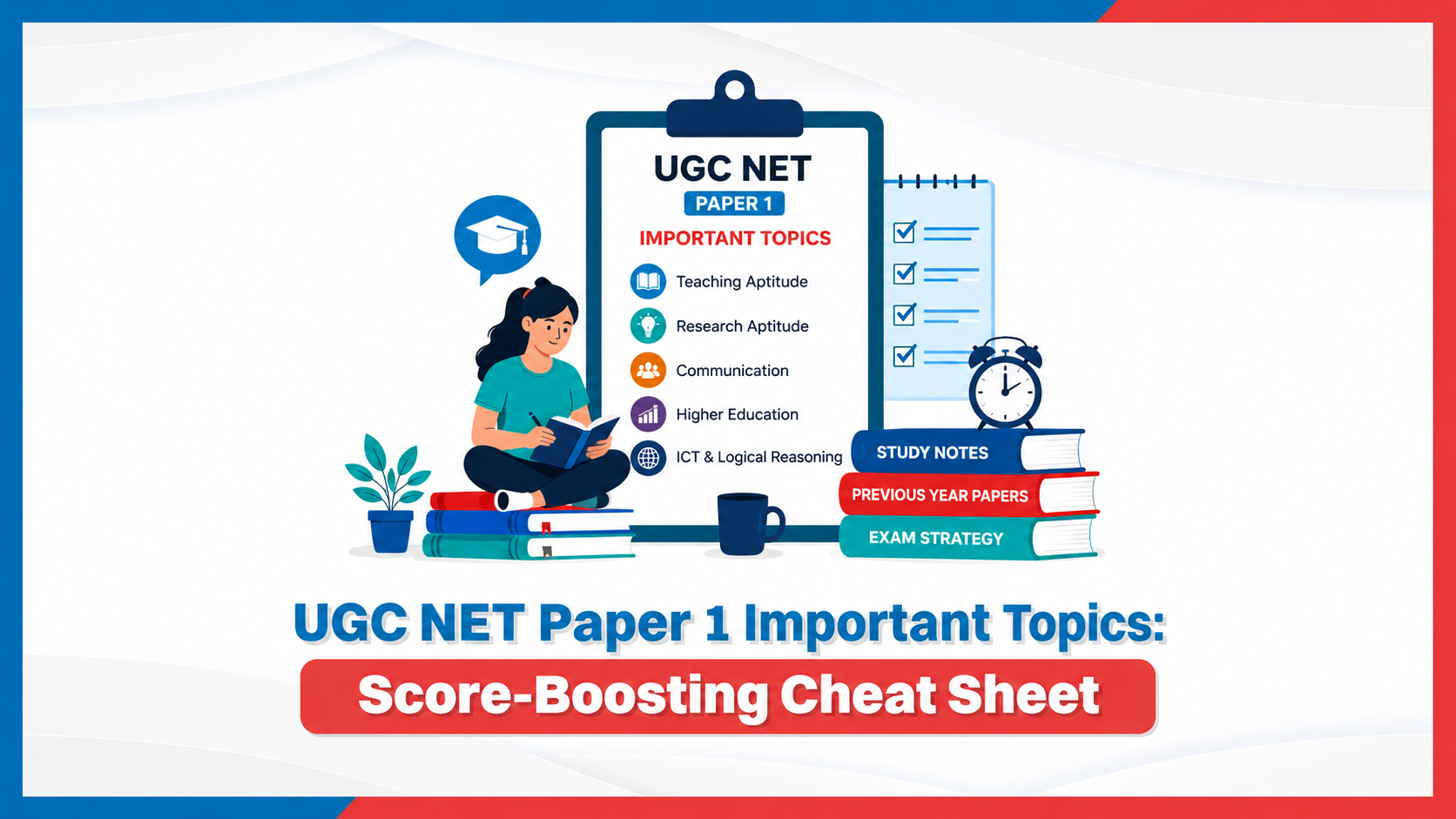
UGC NET Paper 1 Important Topics: Score-Boosting Cheat Sheet
Comprehension, Communication, Mathematical Reasoning, Logical Reasoning, Data Interpretation, Information and Communication Technology (ICT), People...
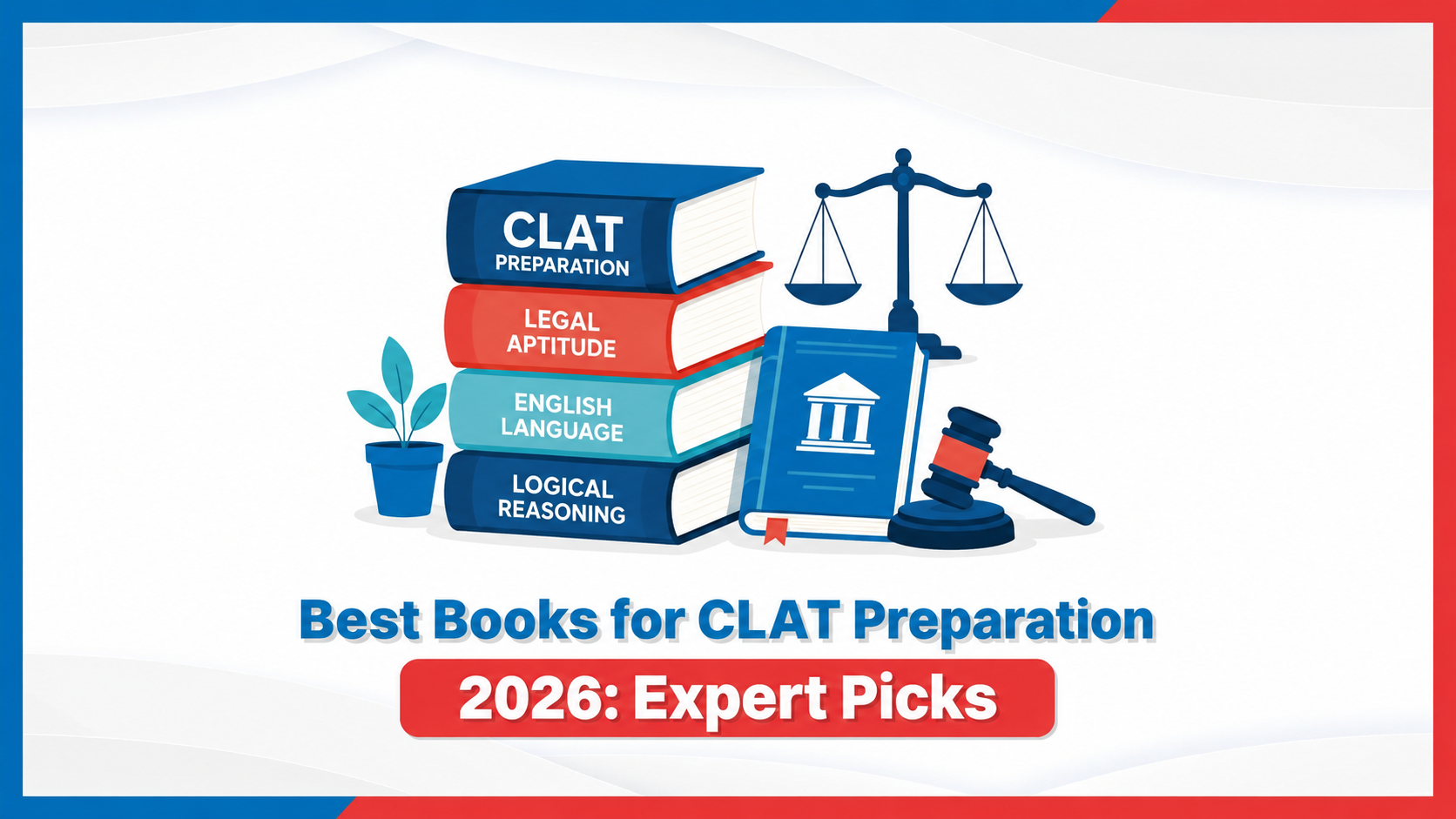
Best Books for CLAT Preparation 2026: Expert Picks
If you are planning to appear for CLAT 2027, one of the first things you need to do is pick the right books. With so many options available in the...
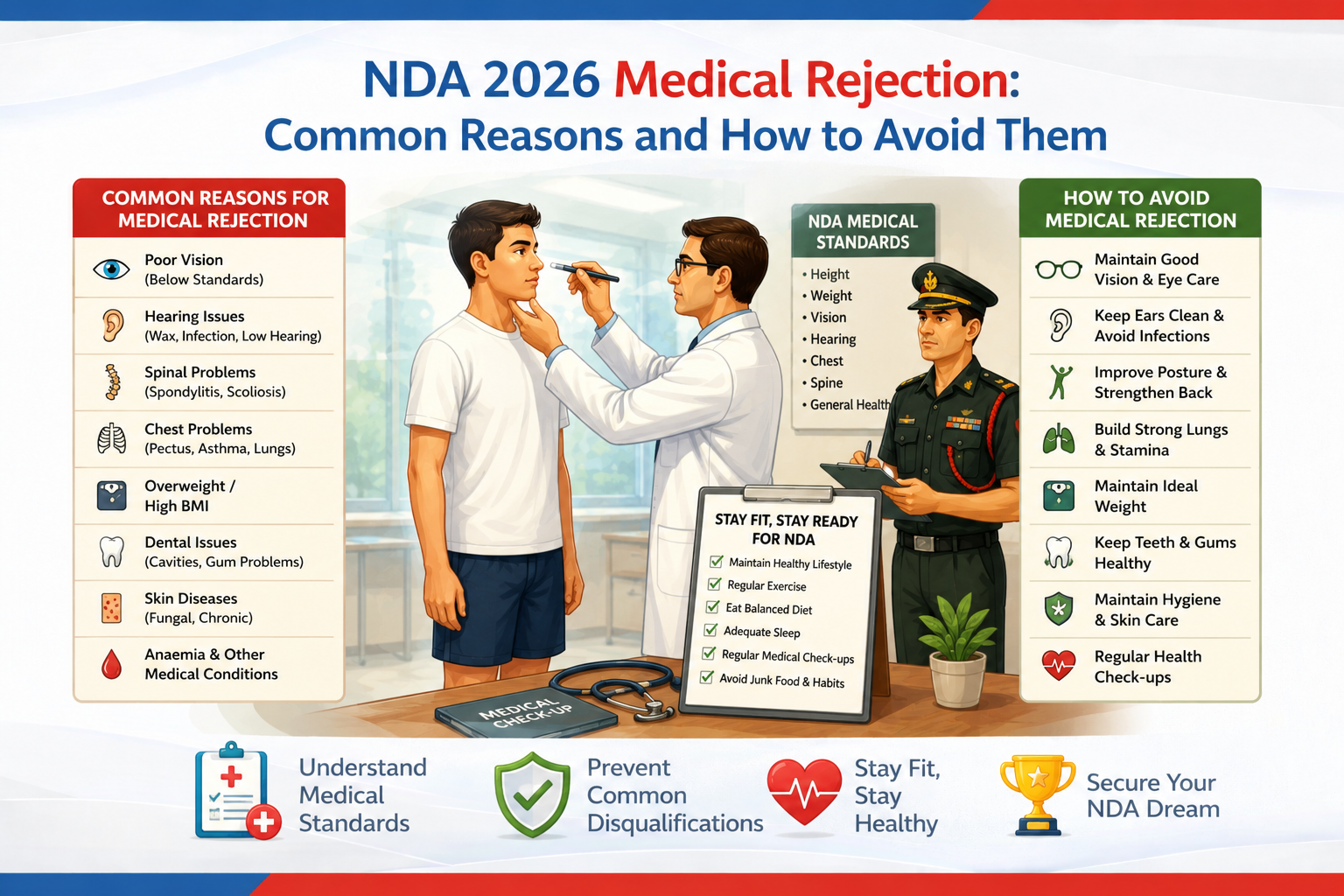
NDA 2026 Medical Rejection: Common Reasons and How to Avoid Them
Imagine putting in hard work for months, clearing the NDA written exam, surviving the SSB pressure, and then getting rejected in the medicals....
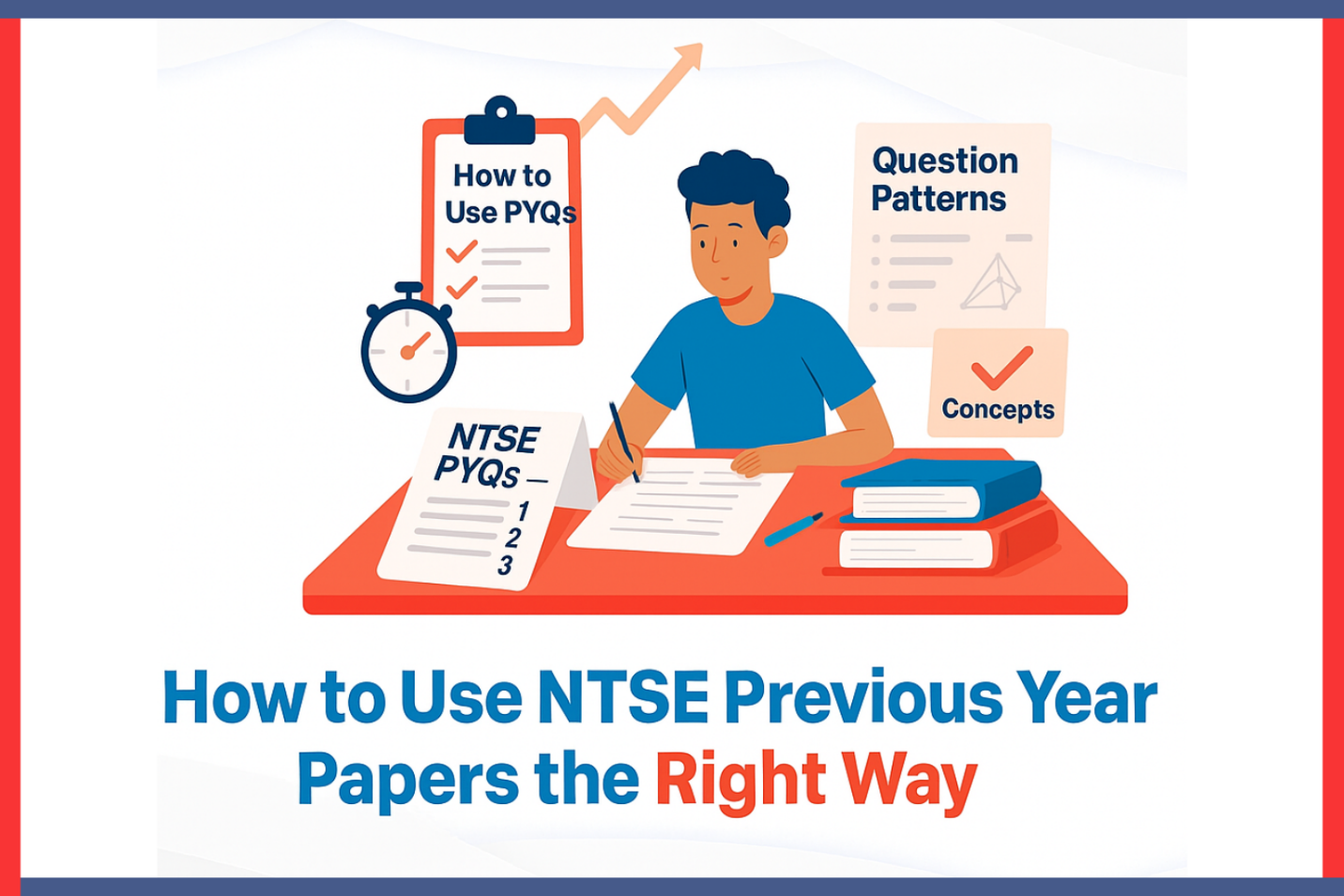
How to Use NTSE Previous Year Papers the Right Way?
Preparing for the National Talent Search Examination (NTSE) requires smart work along with hard work. Previous year papers are your secret weapon to...
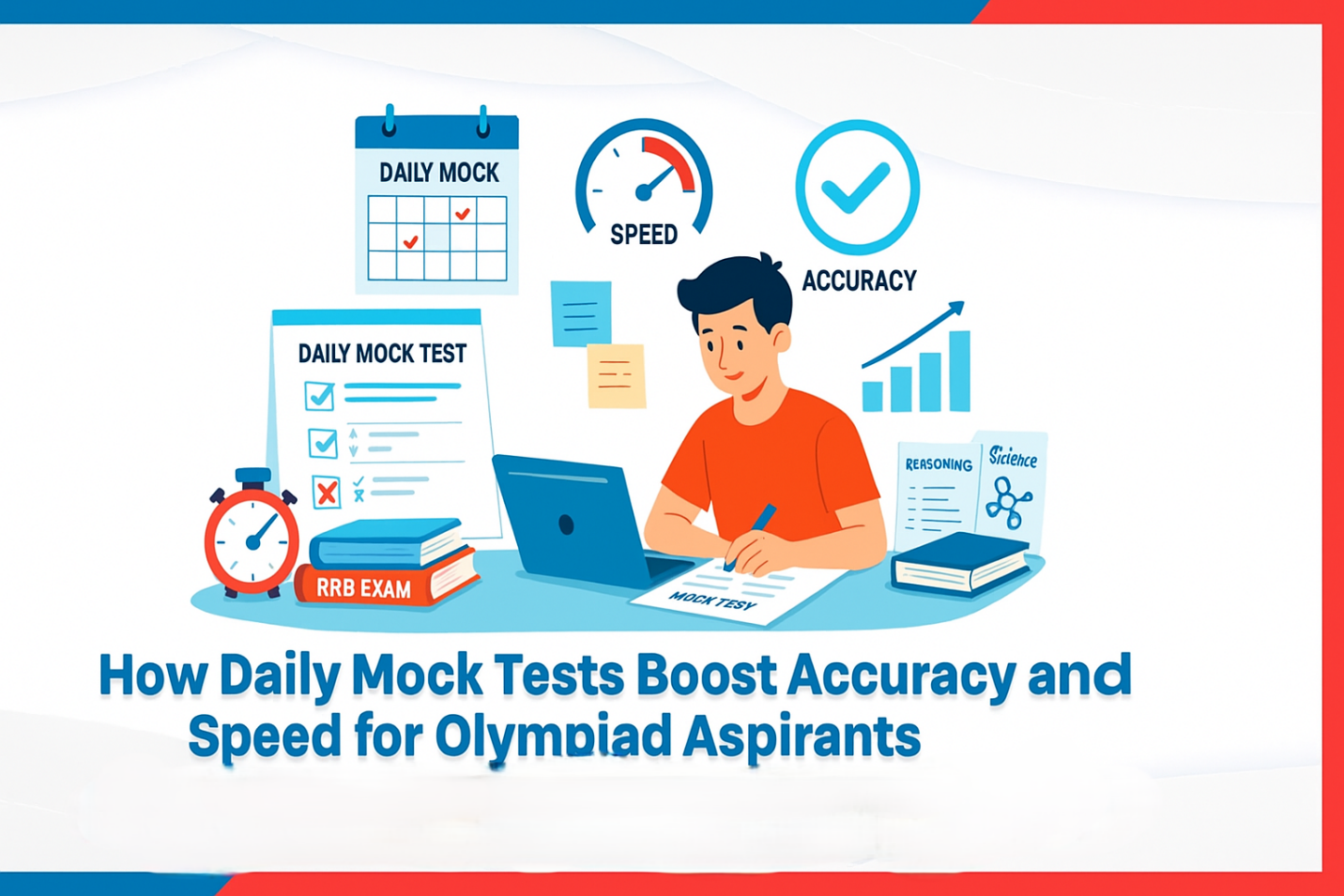
How Daily Mock Tests Boost Accuracy and Speed for Olympiad Aspirants
When students get ready for their Olympiad exams, they require more than just conceptual understanding. The preparation needs precision, speed, and...
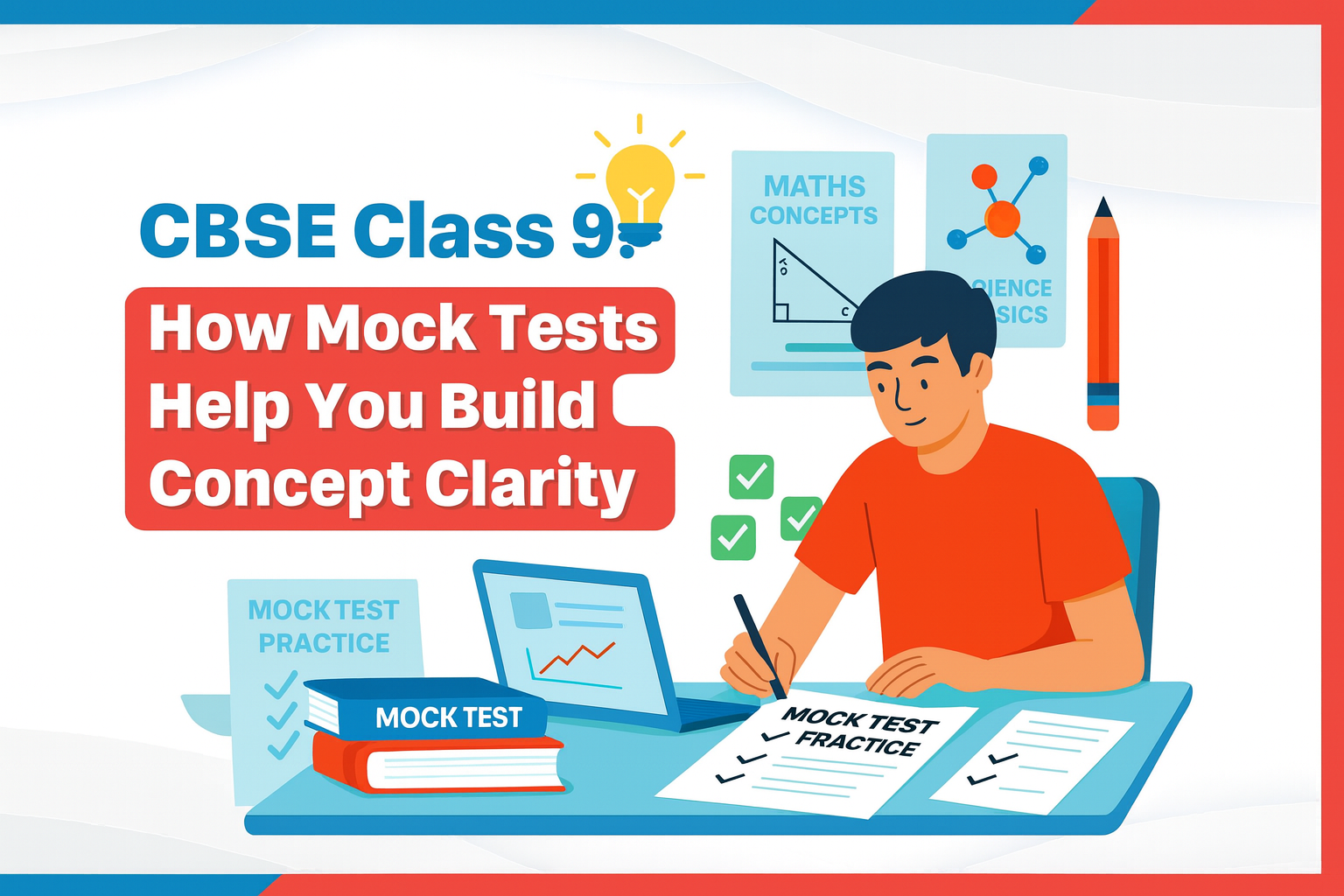
CBSE Class 9: How Mock Tests Help You Build Concept Clarity
Class 9 is a crucial year in every student's academic journey. It's the foundation year that sets the stage for your board exams in Class 10 and...